Dangote Reacts to Shareholder Memes, Announces 2028 Fertiliser IPO

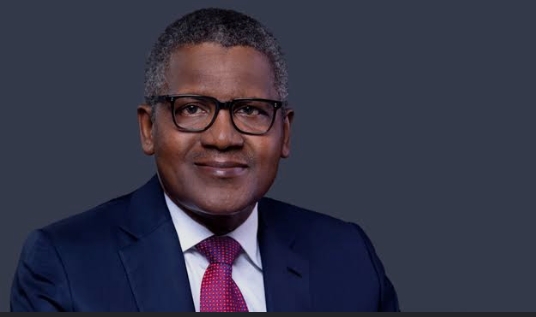
Africa’s richest man and founder of Dangote Group, Aliko Dangote, has joked about viral social media posts by new Nigerian shareholders demanding a “board meeting” and confirmed plans to list the group’s fertiliser business in 2028. Dangote made the remarks during an interview at the Qatar Economic Forum on Sunday while discussing the group’s ownership structure and plans to bring more investors into its businesses. Dangote Reacts to Viral Shareholder Memes Speaking about attracting more shareholders, Dangote said the group had traditionally operated without partners but was now opening up its businesses to more investors. “No, we have actually everything we do by ourselves. We don’t have partners. But that’s why we are now looking for all these massive number of people to now become our partners,” he said. He then joked about the reaction of Nigerians who recently bought shares in the Dangote Petroleum Refinery through its ongoing initial public offering. “You must have seen that they’ve been calling me now for a board meeting,” Dangote said. The comment comes amid a wave of memes and humorous posts from retail investors portraying themselves as co-owners and executives of the refinery. Dangote Confirms Fertiliser IPO for 2028 Dangote also confirmed that the group plans to take its fertiliser business public. Asked about the possibility of an IPO, he said, “Oh, yeah, yeah. I mean, we will IPO it. It’s going to be the biggest fertilizer company on earth.” When asked when the listing would happen, Dangote replied: “Yes, it will be 2028.” Dangote Fertiliser operates a $2.5 billion fertiliser plant in Ibeju-Lekki, Lagos, with an annual production capacity of about three million tonnes of urea. The group has also outlined plans to expand its fertiliser production capacity to about 12 million tonnes annually by 2028, including expansion in Nigeria and a proposed plant in Ethiopia. The planned fertiliser IPO comes as the Dangote Petroleum Refinery’s share offer continues to attract interest from Nigerian retail investors.

Dangote Refinery IPO Set to Open in 12 Days

  Aliko Dangote, President of Dangote Industries Limited, has announced that the initial public offering (IPO) of the Dangote Refinery is expected to open within the next 10 to 12 days. Dangote disclosed this on Thursday while speaking to investors and analysts in Botswana, according to Reuters. The $20bn refinery, Africa’s largest, is expected to raise about $5bn through the IPO, which could become the largest public offering on the continent. “So our dream is that we want to make sure we double the capacity of the refinery… which will take ​us to 1.4 million barrels per day. The IPO will ​open in the next 10 to 12 days,” Dangote ⁠said. The Lagos-based refinery, already Africa’s largest, hit its full designed capacity of 650,000 barrels per day in February and has since pushed output beyond that mark, touching 700,000 barrels per day in tests. Dangote does not release margin figures for the plant, though refiners worldwide have posted stronger profits lately as Middle East instability drove buyers toward alternative fuel sources. Beyond the refinery listing, Dangote used the Botswana trip to lay out a wider set of moves for his industrial empire. Dangote Cement is set for a secondary listing on the London Stock Exchange, likely in October, a step meant to open the company up to a broader pool of international investors. He also confirmed a long-mooted expansion beyond Nigeria’s borders: a new refinery on Kenya’s coast, built with East African governments as partners, to supply refined fuel to Kenya and its neighbours and cut the region’s dependence on imports. It would be the group’s biggest refining bet outside Nigeria yet, with construction expected to take up to three years.

Nigeria’s Economy Expands by 4.43% in Q2 — NBS

  Nigeria’s economy recorded a 4.43 per cent year-on-year growth in real terms in the second quarter of 2026, surpassing the 4.23 per cent growth posted in the same period of 2025, according to the National Bureau of Statistics. The figure also represents an improvement from the 3.89 per cent growth recorded in the first quarter of 2026. The NBS disclosed this in its latest Nigerian Gross Domestic Product Report for Q2 2026, which contains rebased GDP estimates at constant 2019 prices. “Gross Domestic Product grew by 4.43 per cent (year-on-year) in real terms in the second quarter of 2026, higher than the 4.23 per cent recorded in the second quarter of 2025,” the bureau said. Aggregate GDP at current basic prices stood at N119.29tn, compared with N100.73tn in Q2 2025, representing nominal growth of 18.43 per cent. The report showed that agriculture grew by 4.39 per cent in real terms, up from 2.82 per cent a year earlier, while services expanded by 4.60 per cent, compared with 3.94 per cent. Industrial growth, however, slowed to 3.96 per cent from 7.46 per cent in the corresponding period of 2025. Services remained the economy’s largest broad sector, contributing 56.62 per cent to GDP, slightly above the 56.53 per cent recorded a year earlier. Agriculture accounted for 26.15 per cent of real GDP, marginally below 26.17 per cent in Q2 2025 but above 23.16 per cent in the preceding quarter. Crop production remained the sector’s major driver. The oil sector expanded by 7.31 per cent year-on-year, slowing from 20.46 per cent in Q2 2025 but accelerating from 2.57 per cent in the first quarter of 2026. Average crude oil production increased to 1.72 million barrels per day from 1.68 million barrels per day a year earlier and 1.55 million barrels per day in Q1 2026. Oil contributed 4.16 per cent to real GDP, compared with 4.05 per cent a year earlier and 3.92 per cent in the preceding quarter. The non-oil sector, meanwhile, grew by 4.31 per cent, against 3.64 per cent in Q2 2025 and 3.94 per cent in Q1 2026. The NBS said the sector was driven mainly by “Agriculture (Crop production); Information and Communication (Telecommunications); Real Estate; Trade; Financial & Insurance (Financial Institutions); Manufacturing (Cement); and Construction.” It accounted for 95.84 per cent of real GDP, down slightly from 95.95 per cent a year earlier. Among major sectors, Information and Communication grew by 9.62 per cent, with its contribution to real GDP rising to 11.74 per cent from 11.18 per cent in Q2 2025. Manufacturing expanded by 3.24 per cent, but its share of real GDP declined to 7.72 per cent from 7.81 per cent a year earlier. Construction grew by 6.75 per cent and accounted for 3.68 per cent of GDP. Trade, which accounted for 17.93 per cent of real GDP, grew by 2.40 per cent, improving from 1.29 per cent in Q2 2025. Mining and quarrying expanded by 6.37 per cent, while water supply, sewerage and waste management grew by 11.24 per cent. Accommodation and food services increased by 6.96 per cent, while transportation and storage expanded by 5.70 per cent. Arts, entertainment and recreation posted one of the strongest real growth rates at 11.93 per cent, while real estate grew by 3.76 per cent. Finance and insurance recorded real growth of 9.29 per cent, according to the report. Other sectors also expanded, with administrative and support services growing by 3.27 per cent, public administration by 1.94 per cent, education by 2.76 per cent, and human health and social services by 2.64 per cent. However, electricity, gas, steam and air-conditioning supply contracted by 10.63 per cent, compared with an 11.47 per cent expansion a year earlier, making it one of the major drags on growth. Other services also contracted by 0.70 per cent, although this represented an improvement from the decline recorded in both Q2 2025 and the preceding quarter.

Presidency Confirms 15% Fuel Tariff, Says Policy Will Boost Local Refining

The Presidency on Friday confirmed that President Bola Tinubu has approved a 15 per cent import tariff on petrol and diesel, describing the policy as a strategic step to stimulate local refining and strengthen Nigeria’s energy independence. According to a statement by the Special Adviser to the President on Media and Public Communications, Sunday Dare, on his official X handle on Friday, the new policy is “a bridge, not a burden,” aimed at transforming Nigeria’s petroleum landscape and securing long-term economic stability. He described the policy as a strategic measure to end Nigeria’s dependence on imported fuel and accelerate the country’s path to energy self-sufficiency. “It’s no longer news that President Bola Ahmed Tinubu has approved a 15 per cent import duty on petrol and diesel, a bold and strategic move aimed at reshaping Nigeria’s energy landscape,” Dare wrote. He explained that for years, Nigeria had depended heavily on imported fuel despite being one of the world’s leading crude oil producers, a situation that drained foreign exchange, hindered job creation, and stifled local refining investments. “For years, the nation has depended heavily on imported fuel despite being a leading crude oil producer, draining foreign exchange and exporting jobs that should have been created at home. This new policy is designed to reverse that trend by encouraging local refining, boosting domestic capacity, and ensuring that Nigeria’s oil wealth translates directly into national prosperity,” the statement added. Dare said the policy seeks to make imported products less competitive while tilting the market in favour of locally refined fuel from the Dangote Refinery, Port Harcourt Refinery, and modular plants under construction across the country. “By making imported fuel less competitive, the government is tilting the market in favour of local refineries such as Dangote and other modular plants, laying the groundwork for a self-sustaining and resilient energy sector,” he stated. He added that as domestic refining ramps up, supply will strengthen, and pump prices are expected to stabilise over time. The policy, according to him, will also stimulate industrial activity, create jobs, and attract fresh investments into the downstream petroleum value chain. “As local refining ramps up and supply strengthens, prices are expected to moderate while jobs, investment, and industrial activity expand. This policy is therefore not a burden, but a bridge, from dependence to independence, from vulnerability to strength,” Dare said. The presidential aide’s comment marks a departure from the position of petroleum marketers, who have warned that the pump price of Premium Motor Spirit, popularly known as petrol, could rise above N1,000 per litre following President Bola Tinubu’s approval of a 15 per cent ad-valorem import tariff on fuel imports. The new policy, which takes effect after a 30-day transition period expected to end on 21 November 2025, is part of the government’s strategy to protect local refiners and reduce the influx of cheaper imported products that threaten domestic refining investments. PUNCH Online had earlier reported that Tinubu approved the introduction of a 15 per cent ad valorem import duty on petrol and diesel imports into Nigeria. In a letter dated October 21, 2025, reported publicly on October 30 2025, and addressed to the Attorney-General of the Federation and Minister of Justice, the Federal Inland Revenue Service and the Nigerian Midstream and Downstream Petroleum Regulatory Authority, Tinubu directed the immediate implementation of the tariff as part of what the government described as a “market-responsive import tariff framework.” However, marketers say the move could backfire and push retail prices beyond the reach of average Nigerians. Commenting in a telephone interview on Thursday, multiple depot operators with knowledge of the matter, who spoke on condition of anonymity, said the decision could further raise the price of petrol, which already sells for around N920 per litre, in many parts of the country. “As it is, the price of fuel may go above N1,000 per litre. I don’t know why the government will be adding more to people’s suffering,” one of the depot operators said. The National Vice-President of the Independent Petroleum Marketers Association of Nigeria, Hammed Fashola, also agreed that the tariff had its implications, saying it might lead to a price surge. Fashola said the policy had both positive and negative effects, adding that it could discourage importation while promoting local refining. The IPMAN leader opined that some marketers might perceive it as an opportunity to monopolise the sector in favour of Dangote and a few other refineries. “The 15 per cent tariff on imported fuel has its own implications. Maybe the price will go up, and equally, it will discourage importers from bringing in fuel if it becomes too costly. “But it has both negative and positive effects on the sector. I see that the government is trying to protect local refiners, but it will have its own implications because people will see it as a way of monopolising the industry for certain people. At the same time, the government aims to protect the local refiners.” PUNCH Online reports that the latest data from the Nigerian Midstream and Downstream Petroleum Regulatory Authority indicate that petrol imports still accounted for about 69 per cent of the country’s total fuel demand over the 15 months between August 2024 and October 10, 2025.
Reps Move to Intervene in PENGASSAN–Dangote Refinery Dispute

  The House of Representatives on Tuesday resolved to intervene in the recent face-off between members of the Petroleum and Natural Gas Senior Staff Association of Nigeria and the Dangote Refinery, which had disrupted petroleum product distribution nationwide. The resolution of the House followed the consideration and adoption of a motion of urgent public importance co-sponsored by Kano and Sokoto lawmakers, Alhassan Doguwa and Abdussamad Dasuki, respectively, at Tuesday’s plenary. In the motion titled, ‘We need to protect private investment from adversarial unionism,’ the lawmakers drew the attention of their colleagues to the significance of the Dangote Refinery, describing it as the largest private petroleum refinery in Africa. The face-off between PENGASSAN and the Dangote Refinery led to an industrial action which commenced on September 29, 2025, disrupting the operations at the $20bn refinery. It also led to a disruption in Nigeria’s crude oil production, with a reported daily loss of approximately 200,000 barrels over three days. The disruption worsened the petroleum supply situation across the country, resulting in scarcity and long queues at filling stations in several states, resulting in severe hardship for millions of Nigerians. Speaking on the motion, Doguwa, who represents the Doguwa/Tudun Wada Federal Constituency, Kano State, stressed the need to protect the Dangote Refinery given its strategic significance to the nation’s economy. He said, “The House is aware that the Dangote Refinery is a strategic private investment of immense national importance, with the potential to guarantee energy security, reduce import dependency, generate employment, and conserve foreign exchange. “We are aware that the Dangote Refinery operates within a Free Trade Zone and therefore falls under the regulatory framework of the Nigeria Export Processing Zones Authority, particularly Section 18(5) of the Nigeria Export Processing Zones Act, which clearly states that ‘Employment in the free zone shall be governed by rules and regulations made by the Authority and not subject to the provisions of any enactments relating to employment matters.’ “The House is concerned that actions by labour unions that disregard the legal protections conferred on Free Zones under the NEPZA Act not only constitute a breach of law but also create a hostile investment environment that may deter future local and foreign investors. “We are worried that if private investments of strategic national importance are continually subjected to unlawful disruptions by adversarial unionism, Nigeria risks not only the failure of key economic assets but also the erosion of investor confidence necessary for national growth and development.” In his contribution, the member representing Chibok/Damboa/Gwoza Federal Constituency, Ahmad Jaha, urged the House to tread carefully, adding that the call for a probe as prayed by the motion was ill-timed. Following the adoption of the motion, the House urged its leadership to broker peace between the two parties in the interest of the nation. It also urged the Federal Ministries of Labour and Employment, Industry, Trade and Investment, and Justice to “jointly develop and implement a national framework or set of policies to safeguard private investments of strategic national importance from adversarial and unlawful union actions.” It further charged the Federal Ministry of Justice and NEPZA to ensure full enforcement and compliance with the provisions of Section 18(5) of the Nigeria Export Processing Zones Act in all relevant Free Zone operations.

No Better Time to Choose Nigeria Than Now, Tinubu Tells Investors

President Bola Tinubu says there is no better time for investors to come and invest in Nigeria than now. He made this statement at the maiden Bauchi Investment Summit on Wednesday in Bauchi. The summit, with the theme “Revealing a Resilient Economy: Optimising Investment Partnerships,” is being organised by the Bauchi government to showcase the state’s investment potential. Represented by Vice-President Kashim Shettima, the president said Nigeria’s external reserve rose to 43 billion dollars in September. “We came to office promising to turn around the fortunes of the country while the debt service to revenue ratio has shot up to about 100 per cent. “Today, we are pleased to share that we have reduced it to less than 50 per cent. Our GDP gross rate as of last month stood at 4.23 per cent and oil revenues 411 per cent. “Our external reserve has grown to 43 billion dollars as of September 2025, and I assure investors that there is no better time to join Nigeria than now,” he said. According to Tinubu, considering its vast arable lands, Bauchi state can advance climate-smart agriculture and commercial outgrower skills. He highlighted that the state’s natural assets and cultural heritage could boost tourism and hospitality while its renewable and gas potentials could power industrial processes through public-private partnership. The president urged prospective partners to engage with the state governments and relevant Ministries, Departments and Agencies (MDAs) of the federal government to access support. He commended Gov. Bala Mohammed for organising the summit and nationwide road show, to showcase investment opportunities at the stage. Also, Mohammed promised to make the state safe for investors. “We will make you and your investment safer than us. We will make you more important than us. “We are going to do a lot in terms of water resource management so that all our local government areas will have water to be driven by solar and gravity at a minimal cost,” Mohammed said. The Sultan of Sokoto, Muhammad Sa’ad Abubakar III, also tasked leaders to promote good governance as well as monitor various commitments, summits and conferences conducted within the northern states, to evaluate performance for better national development.   NAN  

NUPENG Slams Oshiomhole Over Dangote Strike Comments

The Nigeria Union of Petroleum and Natural Gas Workers on Monday slammed former Nigeria Labour Congress President and Senator representing Edo North, Adams Oshiomhole, over his comments on the ongoing industrial dispute between the Petroleum and Natural Gas Senior Staff Association of Nigeria and the management of Dangote Refinery. Oshiomhole, speaking on Arise TV on Friday, faulted the strike declared by PENGASSAN to protest the alleged sackings of over 800 workers at the refinery, describing it as “hasty and unfair to other workers.” “I think that in seeking to protect a particular set of workers, you do not then risk the jobs of several other workers. When you are pursuing a dispute, the tools you deploy must be such that they do not undermine other people’s jobs”, Oshiomhole said. But NUPENG, in a statement jointly signed on Monday by its President, Williams Akporeha, and General Secretary, Afolabi Olawale, condemned the former labour leader’s remarks as “a betrayal of the working class struggle” and “a complete distortion of Nigerian labour law.” “We witness with utter disappointment a former labour leader now transformed into a vocal advocate for corporate oppression, actively campaigning against the very rights he once championed. “His attempts to rationalise the victimisation of workers for exercising their fundamental rights of association and peaceful action are not only nauseating but represent a flagrant misrepresentation of Nigerian Labour Law and ILO standards”, the statement partly read. In the statement titled “Senator Adams Aliyu Oshiomhole’s Undistinguished Anti-Worker Vitriol,” NUPENG accused the senator of “historical revisionism and political amnesia.” They also faulted him for turning a blind eye to the mass sack of 800 engineers while choosing to criticise the strike action instead. “Section 31 of the Trade Unions Act, Cap T14, LFN 2004, legally recognises trade disputes, including industrial actions undertaken by workers in sympathy with another group. “PENGASSAN’s solidarity action with their members in Dangote Refinery is therefore a protected legal action. The principle that ‘an injury to one is an injury to all’ is the foundational ethic of trade unionism globally”, NUPENG stated. The union said Oshiomhole’s position was “a dangerous toxin designed to weaken the resolve of the working class and strengthen the class enemy,” likening him to “the Judas Iscariot of Nigerian trade unionism.” “Shockingly, this was a man who served several times in the Governing Council of ILO and in the Committee on Application of Standards that receives reports on violations of workers’ rights across the world. “It is unfortunate that Senator Adams Oshiomhole has, by his comments, demonstrated a monumental ignorance of trade unionism”, the union added. Declaring him as persona non grata within the oil and gas sector, NUPENG announced it would no longer participate in any labour event featuring the senator. “In conclusion, the leadership of NUPENG hereby declares Senator Adams Oshiomhole persona non grata within the ranks of Nigerian oil and gas workers,” the statement said. “Henceforth, we will not participate in or lend legitimacy to any event featuring Senator Oshiomhole. The NLC, TUC, and civil society organisations should take notice.” The union reaffirmed its solidarity with PENGASSAN and vowed to pursue justice for the affected workers using “every legal and industrial instrument available in compliance with Nigerian law and global labour standards.”

PENGASSAN, Dangote Reconciliation Meeting Ends in Deadlock

  The meeting between the delegation of the Petroleum and Natural Gas Senior Staff Association and the management of the Dangote Petroleum Refinery over the lingering industrial dispute ended in a deadlock. The reconciliation meeting, called by the Federal Government, started at approximately 4 p.m. on Monday. The meeting, attended by the Minister of Labour and Employment, Mohammed Dingyadi, and the Minister of State for Labour and Employment, Nkiruka Onyejeocha, lasted for about nine hours into the early hours of Tuesday. Following the stalemate, Dingyadi said the meeting would reconvene to resolve the deadlock at 2 p.m. on Tuesday. The Federal Government, worried about the potential impact of the dispute on the nation’s economy and energy security, had summoned both sides to the negotiating table following reports of widespread discontent. The rift stems from allegations by PENGASSAN that Dangote Refinery had embarked on the mass transfer and sack of union members. Also, he allegedly replaced some Nigerians with foreign nationals, a claim the company has consistently denied. The session, originally scheduled for 2 p.m., began around 3:50 p.m. due to the late arrival of key stakeholders, before moving into a closed-door discussion that lasted several hours. In his opening remarks, Dingyadi underscored the gravity of the situation. “What’s happening today is very dear to our economy and to the security of the country. We have been informed that PENGASSAN is on strike,” he said. The minister appealed to both parties to demonstrate good faith in dialogue, stressing that industrial peace in the oil and gas sector was critical at a time Nigeria is banking on the Dangote Refinery to boost local refining capacity and reduce dependence on imported petroleum products. The deadlock means tension remains high, with PENGASSAN insisting its members will not return to work until alleged anti-labour practices are reversed, while Dangote Refinery maintains that its restructuring exercise is in line with global best practices. As the stalemate lingers, concerns are mounting about the potential disruption of operations at the refinery and the ripple effect on petroleum product supply across the country. The next round of talks later today is expected to determine whether a compromise can be reached to avert a full-blown industrial crisis in Niger ia’s oil and gas industry.  

BREAKING: NNPC, NUPRC, NMDPRA Shut As PENGASSAN Begins Strike

The nationwide strike declared by the Petroleum and Natural Gas Senior Staff Association of Nigeria on Monday paralysed operations at key oil and gas regulatory institutions, including the Nigerian National Petroleum Company Limited, the Nigerian Upstream Petroleum Regulatory Commission, and the Nigerian Midstream and Downstream Petroleum Regulatory Authority. The industrial action, which followed the weekend directive by the union’s National Executive Council, saw members across the country withdrawing their services, effectively shutting down critical agencies that drive Nigeria’s oil and gas industry. Our correspondent observed that at the NUPRC headquarters in Abuja, the main gate was firmly locked, leaving several employees stranded outside the premises. Security operatives on duty confirmed that no staff were allowed entry, in line with the strike directive issued by the union. Similarly, activities at the NMDPRA headquarters in the busy Central Business District were completely grounded as workers fully complied with the industrial action. Confirming the situation, the PENGASSAN Chairman in NMDPRA, Tony Iziogba, told The PUNCH that the union had achieved “100 per cent compliance,” effectively restricting access to staff and visitors. He added that his colleagues had also enforced 100 per cent compliance at the NNPCL and other relevant agencies. PENGASSAN said the strike became inevitable after the alleged wrongful dismissal of about 800 workers at the Dangote Petroleum Refinery. The union’s directive to halt crude oil and gas supplies to the Dangote Petroleum Refinery has sent shockwaves through the energy sector, with oil marketers warning of severe disruptions in fuel distribution. This move is expected to choke the domestic market, driving up demand and prices. On Sunday, PENGASSAN announced a nationwide strike, instructing all its members in various offices, companies, institutions, and agencies to cease all services starting at 12:01 am on Monday, September 29, 2025. The union also directed members stationed in various field locations to down tools from 6:00 am on Sunday, September 28, and commence a round-the-clock prayer vigil. In a strongly worded resolution signed by PENGASSAN General Secretary, Lumumba Okugbawa, the union accused the refinery of violating Nigerian labour laws and International Labour Organisation conventions by sacking workers for joining the union. It alleged the dismissed workers had been replaced by foreigners. “All processes involving gas and crude supply to Dangote Refinery should be halted immediately,” the resolution declared. “All IOC (International Oil Companies) branches must ramp down gas production and supply to Dangote Refinery and petrochemicals.” The development has heightened fears of fuel scarcity and blackouts, as NNPC remains the sole importer of petrol while the midstream and downstream authority regulates supply and distribution. Similarly, NUPRC is responsible for monitoring crude production and enforcing gas supply obligations to power plants. All eyes are now on Monday’s emergency meeting convened by the Minister of Labour. Whether dialogue can restore calm or whether Nigeria plunges deeper into crisis may depend on the willingness of both sides to compromise.

Oyo Govt Reaffirms Commitment To Complete All Ongoing Projects Before 2027

  The Oyo State Government has reiterated its unwavering commitment to complete all ongoing infrastructural projects across the state before the end of the current administration in 2027. This assurance was given by the Deputy Governor of Oyo State, Barrister Bayo Lawal, during an on-the-spot monitoring visit to ongoing projects under the Rural Access and Agricultural Marketing Project (RAAMP). The monitoring exercise covers two major project sites: the 8.24 km Okudu-Oyada-FRSC Road, located across Atisbo and Saki West Local Government Areas; and the 21.953 km Oloko-Oyo-Orita Aloba Road, in Iseyin Local Government Area. Lawal emphasized that the administration of Governor Seyi Makinde, under the Omituntun 2.0 agenda, is focused on delivering quality infrastructure that will enhance rural connectivity, boost agricultural productivity, and improve the overall standard of living for residents. He said: Governor Seyi Makinde’s vision is clear and deliberate; no project will be abandoned. Every ongoing road construction and rural development initiative will be completed and delivered to the people of Oyo State before the expiration of this administration in 2027, he stated The Deputy Governor, however, commended the progress recorded so far on the RAAMP projects and assured that the government will continue to monitor and support contractors to ensure timely and quality delivery. The Deputy Governor further reaffirmed that the Makinde-led administration remains committed to transparency, accountability, and people-oriented governance, assuring residents that the benefits of current investments will be felt across every zone in the state. Commending the Oyo State Government for its ongoing efforts to enhance food security, the Secretary of the Grievance Redress Committee for the Okudu-Oyada Road, Mr. Abdulraheem Mojid noted that road construction has significantly improved the livelihoods of residents in the Tede/Saki communities and surrounding areas. The Deputy Governor was accompanied by the Commissioner for Agriculture and Rural Development, Barrister Olasunkanmi Olaleye; the State Project Coordinator, Mrs. Adeola Ekundayo; and other key stakeholders.