US Backs Nigeria’s Acquisition of 12 Attack Helicopters

The United States has reaffirmed its support for Nigeria’s planned acquisition of 12 AH-1Z Viper attack helicopters, as both countries deepen security cooperation to tackle current and emerging threats. The US Mission in Nigeria disclosed this in a post on its official X handle on Tuesday, describing the planned acquisition as part of ongoing efforts to strengthen Nigeria’s defence capabilities and promote regional security. The Mission said, “U.S.-Nigeria security cooperation continues to advance our shared efforts to strengthen regional security. “The planned acquisition of 12 AH-1Z Viper helicopters underscores both countries’ commitment to building Nigeria’s defence capabilities and addressing current and emerging threats together.” It added that the United States valued its continued partnership with Nigeria in promoting peace, security and stability across the region. The planned acquisition is part of a broader US-Nigeria defence partnership covering military equipment, training and programmes designed to strengthen Nigeria’s capacity to counter terrorism and other security threats. In addition, US security cooperation with Nigeria has covered counterterrorism, maritime and border security, military professionalisation and defence trade. In April 2022, the US State Department approved a possible Foreign Military Sale to Nigeria involving 12 AH-1Z attack helicopters and related equipment estimated at $997 million. The proposed package included 28 T700-GE-401C engines, 2,000 Advanced Precision Kill Weapon System guidance sections, logistics support and training. According to the US, the proposed sale was intended to improve Nigeria’s ability to contribute to shared security objectives, promote regional stability and strengthen interoperability with the US and other Western partners. The helicopter deal followed the earlier US sale of 12 A-29 Super Tucano aircraft to Nigeria in 2017 for $497 million. Meanwhile, the US State Department said Nigeria made its first payment for the 12 AH-1Z helicopters in August 2023.

FG Moves to Decriminalise Attempted Suicide in Nigeria

The Federal Government has begun the process of decriminalising attempted suicide in Nigeria after the Federal Executive Council approved the position of the Federal Ministry of Health and Social Welfare on the matter. The Minister of State for Health and Social Welfare, Dr Iziaq Salako, disclosed this in Abuja on Friday during the commemoration of the 2026 World Suicide Prevention Day. Salako, who the ministry’s Permanent Secretary, Daju Kachollom, represented at the event, said the government would now forward the proposal to the National Assembly for the necessary legislative process. The minister described the proposed reform as both a legal and public health measure, stressing that people experiencing mental health crises need care and support rather than punishment. “A person experiencing a mental health crisis should be met with care, support and appropriate intervention, rather than punishment. “Removing the fear of criminal sanctions can help reduce stigma, encourage help-seeking and create greater opportunities for timely intervention,” Salako said. FG to Strengthen Mental Health Support Salako stressed that decriminalising attempted suicide alone would not end suicide in Nigeria. He said the government would continue to strengthen mental health services and expand community-based support. According to him, the government would also prioritise early identification and intervention while encouraging more open conversations about mental health and suicide prevention. Salako identified the National Mental Health Act 2021, National Mental Health Policy 2023 and National Suicide Prevention Strategic Framework 2023–2030 as key policy instruments guiding Nigeria’s response to suicide and mental health challenges. He added that the National Task Force on the Decriminalisation of Attempted Suicide had consulted policymakers and other stakeholders as part of efforts to advance the proposed reform. Government Plans Better Suicide Data Speaking on Nigeria’s mental health data, the National Coordinator, Mental Health Programme, Dr Tunde Ojo, acknowledged gaps in available statistics on suicide and attempted suicide. Ojo said the ministry was conducting surveys and using other data-gathering methods to develop more accurate and verifiable national statistics within the next year. The National Coordinator, National Action for Suicide Prevention, Dr Ade Bash, also reaffirmed the ministry’s plans to integrate mental health services into primary healthcare and strengthen community-based interventions. Stakeholders at the event welcomed the Federal Government’s move to decriminalise attempted suicide and pledged their continued support for the legislative process. They also backed efforts to strengthen suicide prevention programmes, improve access to mental healthcare and provide better support for people experiencing mental health crises in Nigeria.

Nigeria Won’t Tolerate Dehumanisation of Its Citizens in South Africa — Shettima

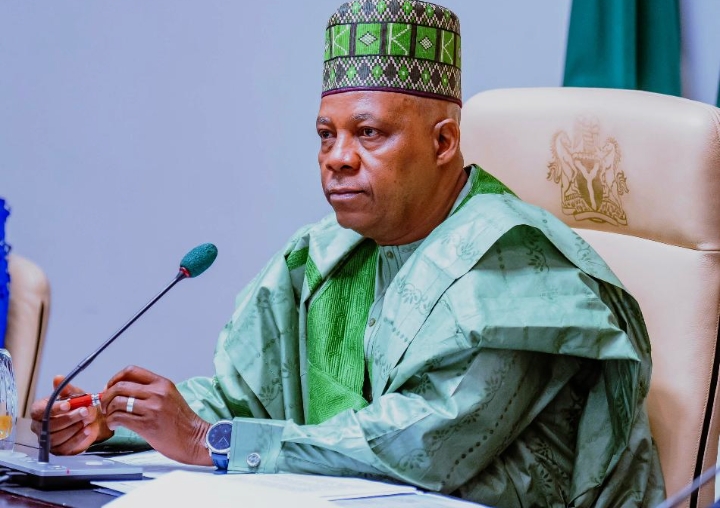
  Vice President Kashim Shettima on Monday said Nigeria would no longer tolerate the dehumanisation or mistreatment of its citizens in South Africa. He warned against the recurring xenophobic and Afrophobic attacks even as he departed Luanda, Angola, for Nigeria after representing President Bola Tinubu at the 21st Extraordinary Session of the Assembly of Heads of State and Government of the African Union. Speaking to newsmen in Luanda shortly before his departure, Shettima said the pattern of attacks had crossed a line Nigeria was no longer willing to accept. The Senior Special Assistant to the VP on Media and Communications, Stanley Nkwocha, revealed this in a statement he signed Monday afternoon titled ‘VP Shettima: Why South Africans Must Rethink Xenophobic, Afrophobic attacks. “The government and people of Nigeria will no longer countenance a situation whereby our people are dehumanised and put into very, very unacceptable situations,” Nkwocha quoted the VP as saying. He invoked Nigeria’s historical role in Southern Africa’s liberation struggle to underline his point, saying, “Those whose palm kernels were cracked by benevolent spirits should learn to be humble.” “We were part of the struggle for the liberation of our brothers and sisters in Southern Africa, and we feel personally pained that our people have been picked up for humiliation,” he added. The Vice President said Nigeria’s preferred approach remained dialogue rather than confrontation, though he made clear that restraint had limits. He said, “We believe in having very robust conversations with our South African brothers. We don’t want to overheat the polity, but once in a while, you have to make it very clear, vehemently clear, that certain situations are unacceptable, and we’ll work things out.” While condemning the attacks, Shettima urged South African authorities to protect lives and uphold human dignity in the enforcement of the country’s immigration policies. His comments followed a message delivered on President Tinubu’s behalf at the same summit, in which Nigeria formally reported the recurring attacks to the African Union and requested that the matter be placed on the agenda of the AU’s 40th Ordinary Session scheduled for January 2027. He also described the incidents as a threat to African solidarity, unity and peaceful coexistence. The Vice President has since departed Luanda for Nigeria.  

Sheikh Gumi: I Am Free to Travel Anywhere in Nigeria

  Popular Islamic cleric, Sheikh Ahmad Gumi has addressed the controversy surrounding his visit to Ibadan late last year, following criticism and allegations from some quarters that he was attempting to promote Islamic influence and certain Northern beliefs in Oyo State. Gumi stressed that nobody can stop him from visiting anywhere in the country, while maintaining that he was not invited by any Muslim group or individual in the South-West. In a post on his Facebook page on Tuesday, he said he was in Ibadan as a representative of northern Islamic scholars. He made this known barely a day after one of the victims of the abduction in the Oriire Local Government Area of Oyo State dismissed claims that their abductors demanded the implementation of Sharia law in the state as part of the conditions for releasing the victims. the principal of Community High School, Esiele, Oyo State, Mrs Rachael Alamu, while speaking from captivity in a now-viral video, said the gunmen said they never demanded the introduction of Sharia law or a N1 billion ransom as reported in some quarters, but rather for the release of their associates currently in the custody of Nigerian authorities. Also, the Muslim Rights Concern rejected the alleged demand for Sharia in a statement issued on Monday, describing the report as “a lie from the pit of Jahannam (hell)”. MURIC argued that the so-called demand was inserted by enemies of Islam in the negotiation team to tarnish the image of Islam. However, aligning with the Islamic group’s position, Gumi wrote, “I quite understand now how Islamophobia is shaping politics in SW (South-West) and why I was unnecessarily dragged into their dirty local politics. “I was in Ibadan, not by the invitation of any SW Muslim individual or group, but as a representative of the Coalition of Northern Muslim Ulama. “Can anybody stop me from going anywhere in Nigeria?” Recall that Gumi visited Ibadan on Wednesday, November 19, 2025, where he served as a special guest and speaker at the Southern Nigerian Ulama Summit. The event took place at the University of Ibadan. During his visit, he also attended a courtesy session alongside other prominent Southern and Northern Muslim scholars.

Subsidy Removal Saved Nigeria from Bankruptcy, Tinubu Insists

President Bola Tinubu on Friday stated that his administration’s decision to remove fuel subsidy at the outset of his tenure rescued Nigeria from the brink of bankruptcy, adding that the challenging reform measures are beginning to produce tangible benefits for both state governments and citizens. “It was challenging at the time, but we survived. We faced litigation and accusations. We survived them. Instead of bankruptcy, Nigeria has survived. The economy has recovered. It is growing. Agriculture is booming,” the President said when he received state governors who gathered at his Ikoyi residence in Lagos to celebrate both the Sallah festival and the third anniversary of his administration. Special Adviser to the President on Information and Strategy, Bayo Onanuga, disclosed details of the meeting in a statement he signed on Friday titled, ‘Fuel Subsidy Removal Saved Nigeria From Bankruptcy, Says President Tinubu.’ In attendance were the governors of Lagos, Nasarawa, Jigawa, Sokoto, Kebbi, Taraba, Niger, Ekiti, Delta, Ondo, Edo, Adamawa, Benue, Enugu, Ogun and Kogi states, as well as the deputy governors of Borno and Kano states. Tinubu argued that the subsidy regime had for years consumed enormous resources that benefited only a small fraction of Nigerians while depriving critical sectors of needed investments. He said ongoing reforms in infrastructure, agriculture, social investment, foreign exchange management and fiscal discipline were beginning to restore investor confidence and improve economic prospects. The President acknowledged the role state governors played in managing public expectations through the most turbulent phase of the reforms, saying, “I’m glad governors are no longer borrowing from the federal government and asking for interventions and not knowing how to survive, how to pay salaries, no more. You kept the spirit, you kept the hope. You persuaded our people to be patient and endure these three years of painful reform, during which we put the economy on a reset. Today, the benefits are showing.” He added, “The economy has recovered. Macroeconomic indices are doing very well. Construction is ongoing on roads and infrastructure; the ones abandoned have been rehabilitated. “The housing industry is coming on very well. Agriculture will prosper again. We will achieve food sovereignty if we utilise the land that is in your possession and in your various states effectively,” he said. The Nigerian leader also referenced the Sokoto-Badagry highway corridor, describing its potential for irrigation infrastructure. According to him, “Today, I was watching some clips of the Sokoto-Badagry axis. Imagine how many dams on that corridor for irrigation, for farmland, for electricity. Many of you have survived and promoted the perseverance of many of our people, asking them to trust this government, and you have built that trust around one person: my leadership. I thank you very much.” In his address, Vice President Kashim Shettima described Tinubu’s economic decisions as acts of historic courage that ended five decades of policy evasion. The Vice President said, “Your Excellency, Mr President, this is the essence of your leadership. You did not come to power in the season of ease. You came at a time when the house required more than a painter. “It required a builder with the courage to examine the foundation you inherited. In that defining hour, you chose not to postpone the surgery. You chose not to massage the wound. You chose to confront the contradictions that have held this country hostage for 50 years. That is the miracle of your courage.” “What you have done is not simply to administer a government. You have begun the difficult work of re-engineering a nation. You have reminded us that reform is not a banquet; it is a battlefield. It is not a picnic for the chicken-hearted. It is a covenant with the future,” Shettima added. Kwara State Governor, AbdulRahman AbdulRazaq, who spoke on behalf of the Nigeria Governors’ Forum, said the subsidy removal and fiscal reforms had delivered a tangible transformation in states’ capacity to meet their obligations. He said states that had previously been forced to issue bonds and borrow money to pay salaries were now reducing their debt profiles. “I think the nation was shocked by the audacity of Mr President to implement that serious policy, but today, it has benefited immensely from that policy. “Many states were subject to issuing bonds and borrowing money. Today, states are not going to borrow money; they’re not going to issue bonds. In fact, we’re reducing our debt,” he said. AbdulRazaq also used the occasion to advocate an upward review of the national minimum wage, urging the President to consider raising it to at least N100,000. Imo State Governor, Hope Uzodinma, chairman of the Progressive Governors Forum, said the governors had conducted their own assessment of the President’s performance and arrived at a unanimous verdict. “We are the frontline beneficiaries of the innovative approach you brought to bear in governance. “We came to join you in thanking Almighty God who made this thing possible. You have virtually recovered Nigeria from the brink of collapse to a state of stability and survival. “We have assessed your performance, Mr President, and I’m happy to announce that we have scored it 100 per cent,” Uzodinma said. For his part, Lagos State Governor, Babajide Sanwo-Olu, welcomed his colleagues and thanked them for their continued support for the President, urging them to sustain the political and governance momentum into the 2027 election season.


FIFA Approves Okonkwo’s International Switch from England to Nigeria

  The International Federation of Association Football has officially confirmed goalkeeper Arthur Okonkwo’s change of international allegiance from England to Nigeria, making the 24-year-old Wrexham shot-stopper eligible to represent the Super Eagles. The approval was documented on FIFA’s Change of Association platform on April 6, 2026. Checks by PUNCH Online on Tuesday show Okonkwo’s new national association listed as the Nigeria Football Federation on the FIFA website, replacing his former allegiance, The Football Association Ltd of England. Born on September 9, 2001, in Camden, London, to Nigerian (Igbo) parents, Okonkwo stands at 1.98–1.99m tall and began his career in Arsenal’s academy at age eight. He represented England at youth level between 2015 and 2019, featuring for the U-15, U-16, U-17 and U-18 teams. But he has never featured for the senior Three Lions team, clearing the path for the switch under FIFA eligibility rules. Okonkwo is currently the first-choice goalkeeper for Wrexham in the EFL Championship following a permanent move from Arsenal. He has impressed this season with consistent performances and key saves, helping the club compete in the second tier of English football. His form has drawn attention as a potential high-quality addition to Nigeria’s goalkeeping options. The switch followed discussions with Super Eagles coach Eric Chelle during the Unity Cup in London last year. However, administrative procedures ruled him out of the 2025 Africa Cup of Nations in Morocco. Okonkwo’s move adds depth to the Super Eagles’ goalkeeping options, which currently include Stanley Nwabali and Maduka Okoye.  

25 Killed in Jihadist Attacks in Northeast Nigeria – Report

  At least 25 people were killed in two separate jihadist attacks in northeastern Nigeria’s Adamawa state, local sources told AFP on Thursday. The attacks in the towns of Madagali and Hong in the border region with Cameroon were attributed to Boko Haram jihadists, whose fighters have been active in the area since the group began its violent insurgency in 2009. “Gunmen, we believed to be Boko Haram on many motorcycles… attacked the market. They opened fire on people and killed 21,” a Madagali local government official told AFP about the Tuesday evening attack, on the condition of anonymity. “We are still searching for more bodies as some might have died in the bush from gunshot wounds while trying to find safety.” The attackers also looted a market and stole food items and motorcycles, the source said. Four others, including three troops, were killed in neighbouring Hong, resident Ezekiel Musa told AFP. “Boko Haram attacked us after they left the town. We saw the corpses of three soldiers and one woman was killed,” Musa said. “Now the town has security personnel but some of us have already started leaving the town because of fear of what happened.” – ‘Senseless attacks’ – State governor Adamu Umaru Fintiri condemned the attack without providing an official toll in a statement. “We will not let terrorists undermine our efforts to restore peace and stability,” he said in the statement. “I warn perpetrators: desist from these senseless attacks or face the full weight of our collective resolve.” Since 2009, the jihadist insurgency in Nigeria, led primarily by Boko Haram and its rival faction, the Islamic State West Africa Province (ISWAP), has left more than 40,000 dead and two million displaced in the northeast of the country, according to the United Nations. Nigeria is also grappling with other armed groups that have compounded its insecurity challenges in the north of the country. Military crackdowns have yielded little results. The jihadist conflict has spread to neighbouring Niger, Chad, and Cameroon, prompting the formation of a regional military coalition to fight these groups. The coalition has lost steam in recent years after the withdrawal of Niger due to a diplomatic spat with Nigeria following a 2023 military coup in Niger. Earlier this month, the United States began deploying troops to Nigeria to provide technical and training support to the country’s soldiers in fighting the jihadist groups. The US Africa Command said 200 troops were expected to join the deployment overall. AFP

EU Grants €557m to Nigeria, Others from €1.9bn 2026 Budget

  The European Union on Wednesday announced that Nigeria and other African countries would be receiving the sum of 557 million euros from the bloc’s 2026 humanitarian aid budget. The EU made this known in a statement by its delegation to Nigeria and ECOWAS Embassy’s Press Officer, Mr Modestus Chukwulaka, in Abuja. It said that Nigeria’s North-West region is in focus as it announced a grant of 557 million euros in humanitarian aid to African countries for the 2026 budget. The EU’s announcement came at a time when 239 million people need assistance, and major donors are cutting funding. It said that the amount excluded a separate 14.6 million euros allocated to North Africa. The EU said that it was part of the initial 1.9 billion euros humanitarian aid budget announced by Hadja Lahbib, the European Commissioner for Equality, Preparedness and Crisis Management for this year. According to the statement, Lahbib brings this commitment to Davos, seeking to mobilise private sector finance and innovative solutions that can complement public funding and reach people in need. It said that the EU’s humanitarian aid delivered life-saving assistance where it matters most, emergency food and shelter, critical healthcare, protection for the most vulnerable, and support for children’s education in crisis zones. Furthermore, it said that as other donors retreat and humanitarian law faces unprecedented strain, the EU maintains its commitment, principled aid that reaches people in need, wherever they are. “The initial 1.9 billion euros allocation includes 557 million euros to West and Central Africa, the Sahel, the Lake Chad basin, North-West Nigeria, Central Africa, Southern Africa, the Great Lakes region and the Greater Horn of Africa. “It also includes 448 million euros to the Middle East, particularly Gaza, further to last year’s fragile ceasefire, as well as Iraq, Yemen, Syria, and Lebanon. “145 million euros is allocated to humanitarian needs in Ukraine, as Russia’s invasion enters its fourth year, and an additional eight million euros for humanitarian projects in Moldova,” it said. It said that 126 million euros is allocated to address humanitarian needs in Afghanistan, Pakistan and Iran. “95 million euros was allocated to Central and South America and the Caribbean, a region facing complex humanitarian crises driven by armed conflicts, widespread violence, political instability, acute inequalities and environmental challenges. “Also, 73 million euros will be allocated to support Southeast Asia and the Pacific, in particular for the Myanmar crisis and its impact in Bangladesh. “Then , 14.6 million euros will be allocated to North Africa, a region that remains exposed to complex political, economic and social challenges. “Additionally, more than 415 million euros is reserved for responding to sudden-onset emergencies worldwide, and maintaining a strategic supply chain,” it said. The statement said that the EU commissioner mobilised private sector support in Davos to close the gap between record humanitarian needs and available resources, which requires new approaches. It said that Lahbib’s other engagements in Davos were to discuss with business leaders and investors on how the private sector can bring innovation, scale, and new financing models to humanitarian responses. It said that together with the World Economic Forum, she will co-host an event on ‘New Alliances in Aid and Development’ on 22 January. “Lahbib’s full Davos agenda, including bilateral meetings amongst others engagements in Davos,” it said. The News Agency of Nigeria (NAN) reports that the EU and its member-states are the leading global humanitarian aid donors. The commission has been providing humanitarian aid since 1992 in over 110 countries, delivered through humanitarian NGOs, international organisations (including UN agencies), and specialised agencies in the member-states. NAN

AFCON 2025: Nigeria Remains Proud of you, FG Tells Super Eagles

  The Federal Government has commended the Super Eagles for their performance at the 2025 Africa Cup of Nations, assuring the team that Nigerians remain proud of them despite their semi-final exit from the tournament. In a statement released on Thursday by the Minister of Information and National Orientation, Mohammed Idris, the government praised the players for representing the country with pride, dignity and resilience throughout the competition. “Nigeria remains proud of you,” Idris said, noting that the Super Eagles displayed character, teamwork and commitment even in defeat. He said the players’ conduct and fighting spirit embodied the values associated with the national colours, stressing that the team’s effort mattered as much as the final result. “Even in defeat, you showed character, teamwork and resilience, and those qualities matter deeply to the nation you represent,” the minister said. According to Idris, the Super Eagles reminded Nigerians that playing for the country goes beyond winning matches, describing the green and white jersey as a symbol of courage, unity and perseverance. “You reminded us that wearing the green and white is about courage, unity and never giving up. Football has its highs and lows, but your effort and commitment throughout this tournament have earned the respect and gratitude of Nigerians at home and abroad,” he said The minister urged the team to remain united, learn from the experience and return stronger, assuring them of the nation’s continued support. “Hold your heads high, stay united and return stronger. Nigeria is grateful for the joy and hope you gave us during this competition, and the nation stands with you, always,” Idris added. The Super Eagles were knocked out of the tournament on Wednesday after losing 4–2 in a penalty shootout to host nation Morocco, following a goalless draw after extra time at the Prince Moulay Abdellah Stadium. The semi-final was keenly contested, with Morocco enjoying more of the attacking initiative, registering 16 shots to Nigeria’s two. Both sides, however, were kept in the game by impressive goalkeeping displays from Nigeria’s Stanley Nwabali and Morocco’s Yassine Bounou. Nigeria’s key attackers, Victor Osimhen and Ademola Lookman, found it difficult to break through the hosts’ defence, as Morocco secured a place in the final via penalties.

Satibo Herbal Bitters Set to Launch in Nigeria, Backed by 60 Years of Organic Excellence

  Satibo Herbal Alcoholic Bitters, a new premium product from a family-owned Nigerian natural products company, is set to hit the market this week. A statement by the company’s Chief Executive Officer of Duran Organic Health Limited, Prince Adediran P. Ayeni assured consumers of a smooth herbal taste backed by more than 60 years of organic expertise. “The bitters combine time-tested herbs, roots, and botanicals in a controlled alcohol base for digestion support, appetite stimulation, and general wellness when consumed responsibly. Unlike traditional harsh bitters, Satibo offers a balanced flavour available straight, chilled, or mixed,” he said. He added: “The product’s sleek packaging targets retail shelves, bars, and lounges nationwide.” “After decades of shaping Nigeria’s organic landscape, we’re thrilled to evolve our legacy into Satibo — a bitters that’s as trustworthy as our heritage and as fresh as today’s tastes,” a company representative said. Speaking further, he stated that Satibo is now available through wholesalers, markets, and hospitality venues, supported by digital campaigns, tastings, and nightlife promotions. He equally added that distributors are wanted throughout the country.