US Backs Nigeria’s Acquisition of 12 Attack Helicopters

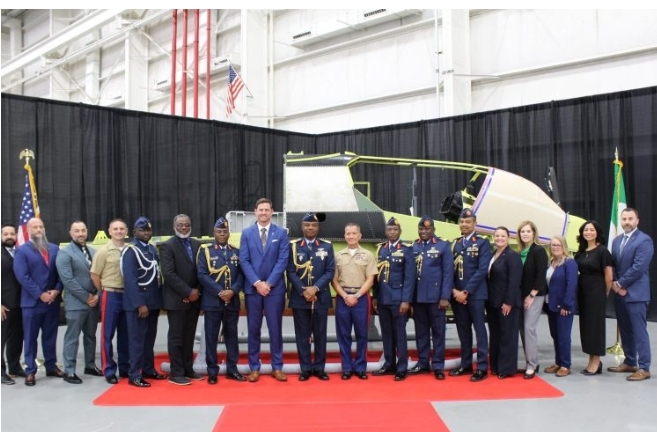
The United States has reaffirmed its support for Nigeria’s planned acquisition of 12 AH-1Z Viper attack helicopters, as both countries deepen security cooperation to tackle current and emerging threats. The US Mission in Nigeria disclosed this in a post on its official X handle on Tuesday, describing the planned acquisition as part of ongoing efforts to strengthen Nigeria’s defence capabilities and promote regional security. The Mission said, “U.S.-Nigeria security cooperation continues to advance our shared efforts to strengthen regional security. “The planned acquisition of 12 AH-1Z Viper helicopters underscores both countries’ commitment to building Nigeria’s defence capabilities and addressing current and emerging threats together.” It added that the United States valued its continued partnership with Nigeria in promoting peace, security and stability across the region. The planned acquisition is part of a broader US-Nigeria defence partnership covering military equipment, training and programmes designed to strengthen Nigeria’s capacity to counter terrorism and other security threats. In addition, US security cooperation with Nigeria has covered counterterrorism, maritime and border security, military professionalisation and defence trade. In April 2022, the US State Department approved a possible Foreign Military Sale to Nigeria involving 12 AH-1Z attack helicopters and related equipment estimated at $997 million. The proposed package included 28 T700-GE-401C engines, 2,000 Advanced Precision Kill Weapon System guidance sections, logistics support and training. According to the US, the proposed sale was intended to improve Nigeria’s ability to contribute to shared security objectives, promote regional stability and strengthen interoperability with the US and other Western partners. The helicopter deal followed the earlier US sale of 12 A-29 Super Tucano aircraft to Nigeria in 2017 for $497 million. Meanwhile, the US State Department said Nigeria made its first payment for the 12 AH-1Z helicopters in August 2023.

US Plans to Revoke Up to 200,000 Visas Over Alleged Asylum Fraud

  The US government is planning to revoke the visas of foreign nationals who entered the country for tourism or business but later sought to extend their stay by applying for asylum, the State Department said on Tuesday. The crackdown marks another step in the Trump administration’s signature drive to reduce immigration into the United States. The administration said it is now working with the Department of Homeland Security to identify and revoke the visas of people who, it said, came to America billing themselves as temporary visitors but then applied for asylum so they could stay permanently. “Obtaining a visa in order to seek asylum is fraud — which is grounds for visa revocation,” State Department spokesman Tommy Pigott said in a statement that confirmed press reports about the new policy. The White House, in a post on X, suggested “up to two hundred thousand visas” would be affected and claimed it would be the “largest mass visa revocation in history.” The State Department neither confirmed nor denied that number. Pigott said, “The number of revocations remains dynamic and will be done on a rolling basis.” Early this month the department said that since President Donald Trump returned to power in January 2025, some 175,000 foreigners had seen their US visas revoked on grounds ranging from criminal offenses, including driving under the influence, to praising the killing of the right-wing activist Charlie Kirk. The administration also recently revoked the visas of Mexican officials, including the son of the former president Andres Manuel Lopez Obrador. This prompted a complaint from the current president, Claudia Sheinbaum. Trump, who won reelection in large part on his promise to fight illegal immigration, has expelled huge numbers of people who were in the country without proper residence papers. But he has also worked to restrict the entry of foreigners who do go by the rules and has gone after those who overstay their visas after they expire. Some of these measures have been challenged and curtailed by the courts. Last Friday a federal judge struck down a government ban on visas to nationals from 75 countries who wish to settle in the country indefinitely. These countries included Afghanistan, Brazil, Egypt, Iran, Iraq, Nigeria, Somalia, Thailand and Yemen. The Trump administration is also planning to expand vetting of the social media accounts of visa applicants. “We are making clear that a visa is a privilege — not a right,” Pigott said Tuesday. AFP

US Prisoner Who Survived Eight Execution Dates Dies at 101

  Francis Clifford Smith, a US inmate who spent more than seven decades in prison and survived eight scheduled execution dates, has died at the age of 101, the BBC reported on Wednesday. Smith was convicted of first-degree murder in Connecticut in 1950, when he was 25, but maintained his innocence throughout his imprisonment. He was accused of killing Grover Hart, a night watchman at a Connecticut yacht club, in 1949. Smith was one of two men arrested over the killing, but the other man accepted a plea deal and testified against him. Smith was subsequently convicted and sentenced to death. However, doubts about his conviction emerged over the years. Witnesses later recanted their statements, while another inmate confessed to the murder. One of the officers who interrogated Smith after his arrest also later told the Board of Pardons that he believed Smith was innocent. “I’m not even sure he was present at the murder,” Major Leo Carroll said, according to the Boston Globe. Smith was scheduled for execution eight times and was given a last meal on each occasion before his execution was ultimately spared. He spent more than seven decades in prison, apart from three brief periods of freedom. In 1967, Smith escaped from prison but was recaptured 12 days later. In 1974, he was allowed to leave prison for Christmas Eve and returned the following day. He was granted parole in 1975 but was arrested about 10 months later for petty larceny and possession of a weapon, in violation of his parole. Richard Sparaco, a former executive director of Connecticut’s Board of Pardons and Paroles, said Smith later rejected several attempts to return him to parole. In 2020, however, Smith was granted supervised parole and moved to a care facility for elderly people. Andrius Banevicius, public information officer for Connecticut’s Department of Correction, said Smith became known as “The Birdman of Osborn” because he regularly fed birds while in prison. “He would stuff as much bread as he could … in his clothing,” Banevicius said. “Everyone kind of turned a blind eye to it because they knew he was just feeding the birds.” Smith eventually moved to 60 West, a nursing facility providing care to incarcerated and formerly incarcerated people. David Skoczulek, a spokesman for the facility, said Smith died in his sleep in June and was later cremated. “Essentially, he died of old age,” Skoczulek said. “He had very limited family involvement around his passing, but we assured it was appropriate, met his wishes and was dignified.” Researchers say Smith’s case also highlights the growing challenge of caring for an ageing prison population in the US. Dr Stephanie Prost, a researcher specialising in older adults and prison settings at the University of Louisville, said many prison systems face similar challenges. “We’re not the only jurisdiction that’s facing that ageing-related crisis, because similar issues are percolating in Australia and England,” she said. “It’s an international issue in terms of the population. Although, of course, we have a larger number of individuals in the US.” A 2025 study found that the number of people aged 55 and older in US prisons increased by nearly 400% between 1991 and 2021. Researchers have called for measures such as compassionate release and elderly or medical parole to help address the needs of ageing prisoners. Research has also found that imprisonment can contribute to “accelerated ageing”, with some health conditions developing earlier among people who have spent long periods in prison. Skoczulek said long-term incarceration can have a significant effect on a person’s health. “We frequently say that a person coming from a long period of incarceration can be 60 but have the health status of a 90-year-old,” he said. Smith reportedly experienced dementia towards the end of his life, although Banevicius did not confirm the condition. “He was 101 and a half,” Banevicius said. “He did pretty well as far as longevity is concerned.”

US Tightens Green Card Rules, Introduces Stricter Public Charge Test

  The United States will implement stricter public charge assessments for certain green card applicants starting September 18, 2026, under new guidance issued by U.S. Citizenship and Immigration Services. The updated guidance published on USCIS’ website and sighted by PUNCH Online on Wednesday explains how USCIS officers will determine whether an immigrant applying to adjust status to lawful permanent residence is likely at any time to become a public charge. A public charge generally refers to an immigrant who is considered likely to become primarily dependent on government assistance for support. Under the new policy, officers will consider five statutory factors: the applicant’s age, health, family status, assets, resources and financial status, as well as education and skills. “USCIS will review all relevant evidence in an alien’s record and make case-by-case decisions in the totality of the alien’s circumstances,” the agency said. USCIS said officers may also consider other relevant factors, including an applicant’s receipt of means-tested public benefits. For benefits received before September 18, 2026, USCIS said it will consider public cash assistance for income maintenance and long-term institutionalisation at government expense. For benefits received on or after September 18, the agency said it will consider a broader range of means-tested benefits. The changes follow a Department of Homeland Security final rule that rescinds the 2022 public charge regulation. The rule was published in the Federal Register on July 20 and is scheduled to take effect on September 18. USCIS said the updated approach is intended to reflect congressional intent that immigrants in the United States remain self-sufficient and do not depend on taxpayer-funded government benefits. However, not all green card applicants will be affected by the public charge requirement. USCIS maintains exemptions for several categories, including refugees and asylees, certain victims of human trafficking and qualifying criminal activity, special immigrant juveniles and certain Violence Against Women Act self-petitioners. The agency will also continue its public charge bond process. Where an officer finds an applicant inadmissible solely because the person is likely to become a public charge, USCIS may invite the applicant to post a financial bond. USCIS said the amount of the bond will take into account the government assistance the applicant may be eligible for and potentially receive over the following five years. The agency stressed that a public charge determination is not based on a single factor but on the applicant’s overall circumstances. The new guidance will apply to Form I-485 applications subject to the public charge ground of inadmissibility that are postmarked or electronically submitted on or after September 18, 2026.

US Lawmaker Criticizes Bola Ahmed Tinubu Over Security Aid Compliance, Calls for Funding Reassessment

  A United States lawmaker, Riley Moore, has faulted the administration of President Bola Ahmed Tinubu, citing what he described as its failure to comply with conditions tied to U.S. security assistance to Nigeria. Moore, who represents West Virginia’s 2nd District, made this known in a post on X on Wednesday, urging the US Secretary of State, Marco Rubio, to consider the development when administering upcoming funding cycles. “In my view, the Tinubu administration has failed to live up to the conditions the appropriations committee placed on security assistance. “I urge @SecRubio to take this into account in administering both FY26 and FY27 funding,” he wrote. The reference to FY26 and FY27 relates to the United States fiscal years, which run from October 1 to September 30, covering the next budget cycles during which congress determines allocations for foreign assistance. The funding under discussion includes US security support to Nigeria, such as military training, equipment supply, intelligence cooperation and counter-terrorism assistance aimed at tackling threats including insurgency, banditry and organised crime. Such assistance is subject to approval by the US Congress and is often tied to conditions, including compliance with human rights standards, accountability in the use of funds and measurable progress in addressing security challenges. The reference to FY26 and FY27 relates to the United States fiscal years, which run from October 1 to September 30, covering the next budget cycles during which congress determines allocations for foreign assistance. The funding under discussion includes US security support to Nigeria, such as military training, equipment supply, intelligence cooperation and counter-terrorism assistance aimed at tackling threats including insurgency, banditry and organised crime. Such assistance is subject to approval by the US Congress and is often tied to conditions, including compliance with human rights standards, accountability in the use of funds and measurable progress in addressing security challenges. “My brothers and sisters in Christ are murdered for practising their faith and belief in our Lord Jesus Christ,” Moore said at the time, warning that prolonged inaction could worsen the situation. He further argued that despite years of support from the United States, including provision of training and equipment, the crisis had persisted without sufficient response from Nigerian authorities. “If we do not address this and some terrorists take hold in Nigeria, we would have to address it one way or the other. I would like to do it cooperatively with Nigerians,” he said. The Federal Government has, however, rejected claims that the country’s security challenges amount to targeted religious persecution, maintaining that violence affects both Christians and Muslims and is driven by broader security issues. Earlier this year, the Defence Headquarters stated that military cooperation with the United States does not undermine Nigeria’s sovereignty and comes at no cost to the country. The military confirmed the arrival of about 100 US personnel and associated equipment in February, noting that the deployment followed bilateral engagements between Nigerian and US officials. A statement by the Director of Defence Information, Maj. Gen. Samaila Uba, said the collaboration was part of efforts to strengthen Nigeria’s capacity to combat evolving security threats. Despite these assurances, Moore maintained that how Nigeria meets the conditions attached to US assistance will influence future funding decisions, signalling possible increased scrutiny of support programmes in the coming fiscal years.

Trump says US Stopped Ship Delivering Chinese ‘gift’ to Iran

  President Donald Trump on Tuesday said US forces intercepted a ship carrying a “gift” to Iran from China as Tehran tries to restock its military during a ceasefire period. The ship had “a gift from China” which “wasn’t very nice,” Trump told CNBC. “I was a little surprised,” he added, saying he thought he had an “understanding” with China’s President Xi Jinping. A week ago, Trump announced that Xi had assured him there would be no Chinese weapons deliveries to Iran, a close partner with Beijing for years. AFP

US Warns Citizens of Possible Terror Threat to Facilities, Schools in Nigeria

  The United States Embassy in Nigeria has warned of a possible terrorist threat targeting US facilities and US-affiliated schools in the country. In a security notice issued via its website on Monday, the embassy said the alert was intended to inform American citizens in Nigeria of potential risks and advised them to take additional precautions when visiting U.S. diplomatic missions and affiliated institutions. According to the notice, U.S. citizens should exercise increased vigilance when travelling to its offices in Abuja and Lagos, as well as schools affiliated with the United States. “The U.S. Embassy in Abuja informs U.S. citizens of a possible terrorist threat against U.S. facilities and U.S. affiliated schools in Nigeria. “The Embassy recommends that U.S. citizens take additional precautions when traveling to the U.S. Embassy, the U.S. Consulate General in Lagos, and U.S. affiliated schools, to include varying times and routes,” the statement read. The embassy advised American nationals to vary their travel times and routes, avoid predictable routines, and ensure their mobile phones are charged in case of emergencies. “Be aware of your surroundings, keep a low profile, review your personal security plans, vary your regular routes, keep your cell phone charged in case of emergency, stay alert in public places, avoid crowds and demonstrations, and familiarize yourself with emergency exits when entering buildings,” it said. The embassy did not spell out the source of the threat. The warning in Nigeria also comes amid a global security warning by the United States after Washington and Israel attacked Iran, which has responded with missile and drone attacks against its U.S.-aligned neighbours. It also follows protests in Lagos and some northern states by members of the South-West leadership of the Islamic Movement, who denounced the killing of Iran’s Supreme Leader, Ayatollah Ali Khamenei, in strikes by the United States and Israel. The development comes as Mansoureh Khojasteh Bagherzadeh, wife of Iran’s Supreme Leader, reportedly died from injuries sustained during recent United States and Israeli strikes at her residence in Tehran. Recall that President Donald Trump on Christmas Day ordered U.S. bombings of Nigeria, saying he was targeting jihadists. The attack came after Trump complained that Christians were facing persecution in Africa’s most populous nation, an assessment that is contested in a country that has seen widespread violence against both Christians and Muslims.

US Sanctions Eight Nigerians Over Links to Boko Haram, Cybercrime

  The United States has frozen the assets and properties of eight Nigerians accused of having links to the Islamic sect, Boko Haram, and the Islamic State of Iraq and the Levant. This was contained in a 3,000-page document dated February 10, released by the United States Treasury’s Office of Foreign Assets Control and sighted by the correspondent on Monday. The document also identified individuals sanctioned for cybercrime-related offences and other security threats. The pronouncement comes on the heels of recent recommendations by the US Congress for visa bans and asset freezes on persons and groups accused of violations of religious freedom and persecution of Christians in Nigeria. The former Governor of Kano State, Rabiu Kwankwaso; the Miyetti Allah Cattle Breeders Association of Nigeria; and Miyetti Allah Kautal were recommended by United States lawmakers for visa bans and asset freezes. The OFAC document, titled “Specially Designated Nationals and Blocked Persons List,” detailed individuals of other nationalities and entities whose assets had been frozen, serving as a reference tool. It also provided notice of actions taken against Specially Designated Nationals, whose property and interests were blocked as part of counter-terrorism efforts. According to OFAC, the move forms part of its broader efforts to block the property and interests of Specially Designated Nationals and prevent financial dealings with them. “This publication of Treasury’s Office of Foreign Assets Control is designed as a reference tool providing actual notice of actions by OFAC with respect to Specially Designated Nationals and other persons (which term includes both individuals and entities) whose property is blocked, to assist the public in complying with the various sanctions programmes administered by OFAC,” the agency said. Among those listed is Salih Yusuf Adamu, also known as Salihu Yusuf, born on August 23, 1990, in Nigeria. Yusuf was identified as having ties to Boko Haram and was reported to hold a Nigerian passport. Yusuf was among six Nigerians convicted in 2022 for setting up a Boko Haram cell in the United Arab Emirates to raise funds for insurgents in Nigeria. The six men were convicted in the UAE for attempting to send $782,000 from Dubai to Nigeria. Another individual, Babestan Oluwole Ademulero, born on March 4, 1953, in Nigeria, was designated under SDNTK sanctions. He appeared under several aliases, including Wole A. Babestan and Olatunde Irewole Shofeso. Also designated was Abu Abdullah ibn Umar Al-Barnawi, also known as Ba Idrisa. He was reportedly born between 1989 and 1994 in Maiduguri, Borno State, and was flagged under terrorism-related sanctions. Abu Musab Al-Barnawi, also referred to as Habib Yusuf, was listed with varying birth years between 1990 and 1995. He was identified as a Boko Haram leader and sanctioned under terrorism provisions. Khaled (or Khalid) Al-Barnawi, whose name appeared twice in the publication, was born in 1976 in Maiduguri, Nigeria. He was linked to Boko Haram and listed under several aliases, including Abu Hafsat and Mohammed Usman. Ibrahim Ali Alhassan, born January 31, 1981, in Nigeria, was listed with a Nigerian passport. He was reported to reside in Abu Dhabi, United Arab Emirates, and was linked to Boko Haram. Abu Bakr ibn Muhammad ibn Ali Al-Mainuki, also known as Abu-Bilal Al-Minuki, was born in 1982 in Mainok, Borno State. He was identified as having ties to ISIL. Nnamdi Orson Benson, born March 21, 1987, in Nigeria, was listed under CYBER2 sanctions and was reported to hold a Nigerian passport. The inclusion of these names in the OFAC list highlights Washington’s continued focus on countering terrorism financing and cyber threats. The sanctions mean that all property and interests of these individuals within US jurisdiction are blocked, and US persons are generally prohibited from engaging in transactions with them. Nigerians listed under the US Treasury sanctions face asset freezes under Executive Order 13224. The United States officially designated Boko Haram a foreign terrorist organisation in 2013. According to the US State Department, the group is responsible for numerous attacks in the northern and northeastern regions of the country, as well as in the Lake Chad Basin in Cameroon, Chad, and Niger, that have killed thousands of people since 2009. The US Secretary of State determines countries that have repeatedly provided support for acts of international terrorism. Such countries are designated under three laws: Section 1754(c) of the National Defense Authorization Act for Fiscal Year 2019, Section 40 of the Arms Export Control Act, and Section 620A of the Foreign Assistance Act of 1961. In October 2025, for the second time, US President Donald Trump announced that Nigeria would be added to the US Department of State’s list of “Countries of Particular Concern.” Trump, in a post on X, explained that Nigeria would be placed on a religious freedom watchlist, alleging that Christians were facing persecution and being killed by Muslims. Nigeria was first designated as a Country of Particular Concern in 2020 under President Trump, but former President Joe Biden removed Nigeria from the list shortly after assuming office.
US Condemns Niger, Kebbi School Abductions, Demands Justice

  The United States has condemned the abduction of students and teachers in Niger State, as well as the earlier kidnapping of schoolgirls in Kebbi State. In a statement issued on Monday via its X handle, the State Department’s Bureau of African Affairs described the attacks as acts that must not go unpunished and urged the Federal Government to bring the perpetrators to justice. It further called on the government to strengthen security measures and guarantee the safety of vulnerable communities, including Christian populations. It wrote, “The United States condemns the mass abduction of reportedly over 300 students and teachers from St. Mary’s Catholic School in Papiri, Niger State, Nigeria, and the kidnapping, just days before, of 25 schoolgirls from the Government Girls Comprehensive Secondary School in Maga, Kebbi State. “Those responsible for these crimes must be swiftly captured and held accountable. The Nigerian government must act decisively and do more to protect Christians and ensure Nigerians can live, learn, and practice their religion freely without fear or terror.” PUNCH Online reported that gunmen on November 17 stormed Government Girls Comprehensive Secondary School in Maga, Kebbi State, killing the vice principal, Hassan Makuku, and abducting at least 24 female students. Four days later, on November 21, gunmen raided St. Mary’s Catholic Primary and Secondary School in Papiri, Agwara Local Government Area of Niger State, abducting 303 students and 12 teachers. Initial estimates varied, but the Christian Association of Nigeria later confirmed the figures through a census of missing individuals. Fifty students managed to escape and reunite with their families. The abductions mark a surge in school-targeted violence in Nigeria and echo the 2014 Chibok kidnapping of 276 girls by Boko Haram. In response, the Federal Government initiated rescue operations in various states. President Bola Tinubu, on Thursday, directed the Minister of State for Defence, Bello Matawalle, to relocate to Kebbi State to coordinate security operations for the rescue of the abducted schoolgirls. Governments in Niger, Katsina, Plateau, and Bauchi states have also ordered the closure of numerous schools to prevent further incidents.

Reps Reject US Senate’s ‘Genocide Against Christians’ Claim

The Nigerian House of Representatives has rejected a narrative by the US Senate describing the country’s security challenges as a ‘genocide against Christians’ or state-sponsored persecution. The move comes after US lawmaker Riley Moore urged Secretary of State Marco Rubio to take immediate diplomatic action over what he described as the “systematic persecution and slaughter of Christians” in Nigeria, which he called the deadliest place in the world for followers of the faith. In Moore’s October 6 statement, the lawmaker called for Nigeria’s redesignation as a Country of Particular Concern (CPC) and for the suspension of arms sales until the Nigerian government demonstrates a “tangible commitment” to ending the violence. In a motion presented by Deputy Speaker Benjamin Kalu and supported by all members of the House, lawmakers dismissed the narrative and directed the relevant committees to, within 21 days, collaborate with the Minister of Foreign Affairs, the Nigerian Embassy in Washington D.C., and security agencies to file a formal diplomatic protest against the sponsors of the resolution. Aired on Wednesday on the National Assembly TV, Nigeria, Kalu said the motion, titled “Need for a Coordinated Diplomatic and Domestic Response to the Proposed Nigerian Religious Freedom Accountability Act of 2025 (U.S. Senate Bill 2747),” was necessary to counter “the mischaracterisation of Nigeria’s security and religious freedom landscape.” “The House rejects outrightly narratives that frame Nigeria’s security crisis as a singularly religious conflict or a state-sponsored persecution,” he added. “Our Constitution guarantees freedom of thought, conscience, and religion and bars the adoption of a state religion. Successive administrations, security agencies, and faith leaders have undertaken measures to protect all worshippers and prosecute offenders.’ The Deputy Speaker explained that the U.S. Senate Bill 2747, introduced on September 9, 2025, seeks to compel the U.S. Secretary of State to designate Nigeria as a “Country of Particular Concern” (CPC) and impose sanctions on Nigerian officials under the Global Magnitsky framework. Kalu warned that such a move, based on “incomplete or decontextualised assessments,” could misrepresent facts, strain diplomatic relations, and embolden violent actors. “Insecurity in Nigeria is complex and multi-causal. It is driven by insurgency, criminal banditry, farmer-herder conflicts, separatist violence, and communal disputes that affect citizens of all faiths. International reporting attributes a significant share of fatalities to terrorist groups and criminal gangs, rather than to state policy or any single religious dynamic,” he said. He emphasised that Nigeria remains committed to protecting religious freedom and upholding human rights, noting that both Christian and Muslim communities have suffered from violence. “We condemn all forms of violence and persecution against any person or group on the basis of religion or belief and commiserate with all victims, irrespective of faith,” Kalu said. The House, while reaffirming Nigeria’s “longstanding partnership with the United States as an ally,” stressed that the country’s sovereignty must be respected. He said, “We are mindful of Nigeria’s longstanding partnership with the United States, especially on counterterrorism, human rights, democratic governance, and interfaith dialogue. However, external legislative actions that misrepresent our situation risk undermining that partnership.” To address the issue, the House mandated its committee on Foreign Affairs, National Security and Intelligence, Information, and National Orientation to coordinate with the Ministry of Foreign Affairs, the Nigerian Embassy in Washington D.C., and other relevant agencies to submit a formal diplomatic protest to the sponsors of the U.S. bill within 21 days. It also urged engagement with U.S. legislators to establish a joint Nigeria-U.S. fact-finding mechanism on religious freedom, involving faith leaders and independent experts, and to invite the U.S. Commission on International Religious Freedom (USCIRF) to a hearing before the House. Furthermore, the House directed the National Human Rights Commission, Police, and Department of State Services to submit, within 30 days, a consolidated report on investigations and prosecutions related to religion-linked violence since 2023 to confirm that “there is no state-sponsored persecution based on religion.” The resolution will be transmitted to the Presidency, the Ministry of Foreign Affairs, the U.S. Congress, the State Department, the African Union, and ECOWAS.