Dangote Reacts to Shareholder Memes, Announces 2028 Fertiliser IPO

Dangote Reacts to Shareholder Memes, Announces 2028 Fertiliser IPO

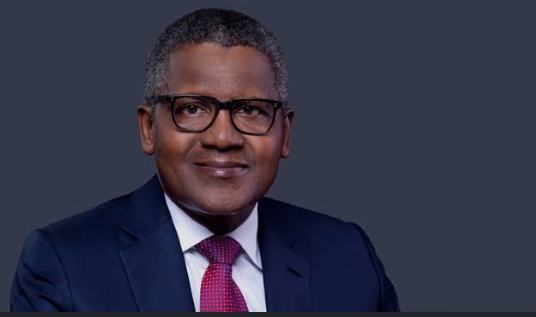
Africa’s richest man and founder of Dangote Group, Aliko Dangote, has joked about viral social media posts by new Nigerian shareholders demanding a “board meeting” and confirmed plans to list the group’s fertiliser business in 2028. Dangote made the remarks during an interview at the Qatar Economic Forum on Sunday while discussing the group’s ownership structure and plans to bring more investors into its businesses. Dangote Reacts to Viral Shareholder Memes Speaking about attracting more shareholders, Dangote said the group had traditionally operated without partners but was now opening up its businesses to more investors. “No, we have actually everything we do by ourselves. We don’t have partners. But that’s why we are now looking for all these massive number of people to now become our partners,” he said. He then joked about the reaction of Nigerians who recently bought shares in the Dangote Petroleum Refinery through its ongoing initial public offering. “You must have seen that they’ve been calling me now for a board meeting,” Dangote said. The comment comes amid a wave of memes and humorous posts from retail investors portraying themselves as co-owners and executives of the refinery. Dangote Confirms Fertiliser IPO for 2028 Dangote also confirmed that the group plans to take its fertiliser business public. Asked about the possibility of an IPO, he said, “Oh, yeah, yeah. I mean, we will IPO it. It’s going to be the biggest fertilizer company on earth.” When asked when the listing would happen, Dangote replied: “Yes, it will be 2028.” Dangote Fertiliser operates a $2.5 billion fertiliser plant in Ibeju-Lekki, Lagos, with an annual production capacity of about three million tonnes of urea. The group has also outlined plans to expand its fertiliser production capacity to about 12 million tonnes annually by 2028, including expansion in Nigeria and a proposed plant in Ethiopia. The planned fertiliser IPO comes as the Dangote Petroleum Refinery’s share offer continues to attract interest from Nigerian retail investors.

Dangote Slashes Fuel Price by N100 as Global Crude Slumps

  The Dangote Refinery on Tuesday reduced its petrol gantry price by N100, from N1,175 to N1,075 per litre. The move followed a slump in global oil prices, with Brent crude dropping to $89 per barrel from over $100 on Monday. Officials of the refinery confirmed the development to our correspondent, adding that diesel prices have also been reduced. They stated that petrol supplied via coastal distribution channels will now sell for N1,050 per litre, reflecting a slight differential for marine logistics. Similarly, diesel is now N1,430 per litre at the gantry, representing a N190 reduction from the earlier price of N1,620 per litre. According to oilprice.com, Brent crude prices witnessed a dramatic reversal on Tuesday, plunging nearly 27 per cent from the previous day’s high of $119 per barrel to as low as $87 per barrel. The Dangote Refinery reportedly blamed global crude volatility for the repeated price hikes, citing tensions arising from the US-Iran conflict. Details later…

Dangote Unveils 10-day Credit Facility for Petrol Station Owners

  The Dangote Group has announced a 10-day credit facility backed by a bank guarantee for petrol station owners and dealers, alongside free direct delivery and other incentives, as part of a new supply arrangement. The company disclosed this in a statement posted on its official X handle on Tuesday, inviting petrol station operators across the country to register to benefit from the offer. According to the statement, participating dealers will enjoy “a 10-day credit facility backed by a bank guarantee,” with a minimum order requirement of 5,000 litres. “Our free direct delivery service will commence soon,” the group said, adding that the offer is open to “all petrol station owners and dealers.” The Dangote Group further called on operators to register their stations to access the supply arrangement. “Register your petrol stations today to benefit from our competitive gantry price,” the statement read. The company also disclosed that petrol supplied under the arrangement will be sold at a gantry price of ₦699 per litre. For enquiries, the group provided the following contact numbers: 0802-347-0470, 0809-324-7070, 0809-324-7071 and 0203. The announcement follows a recent petrol price adjustment by the Dangote Petroleum Refinery. The refinery reduced its ex-depot petrol price from ₦828 to ₦699 per litre, representing a ₦129 cut or a 15.58 per cent reduction. An official of the refinery, who spoke to PUNCH Online on condition of anonymity, confirmed the adjustment, saying, “The refinery has reduced petrol gantry price to ₦699 per litre.” The new price reportedly took effect on December 11, 2025, marking the 20th petrol price adjustment announced by the refinery this year.  

Dangote Petitions ICPC Over NMDPRA CEO, Commission Confirms

  The Independent Corrupt Practices and Other Related Offences Commission has confirmed receipt of a petition from businessman Aliko Dangote against the Chief Executive Officer of the Nigerian Midstream and Downstream Petroleum Regulatory Authority, Farouk Ahmed. In a statement signed by its spokesperson, John Odey, on Tuesday, the anti-graft agency said the petition was submitted through Dangote’s lawyer earlier in the day. “The Independent Corrupt Practices and Other Related Offences Commission (ICPC) writes to confirm that it received a formal petition today, Tuesday, 16th December, 2025, from Alhaji Aliko Dangote through his lawyer. The petition is against the CEO of the NMDPRA, Alhaji Farouk Ahmed,” the commission said. The ICPC added that the petition would be subjected to due investigation. PUNCH Online had reported that in the petition dated and submitted on December 16 through his lawyer, Ogwu Onoja, SAN, Dangote accused the NMDPRA CEO of corruption and misuse of public funds. Among other allegations, he alleges that Farouk spent over $7 million in public funds on his four children’s education at elite Swiss schools, with fees paid upfront for up to six years. “That Engr Farouk Ahmed spent without evidence of lawful means of income humongous amount of money of over 7million dollars of Public funds, for the education of his four children in different schools in Switzerland for a period of six years upfront,” the petition read. This expenditure, Dangote claims, lacks evidence of lawful income sources and constitutes embezzlement, diversion of funds, and abuse of office. He therefore urged the Commission to act decisively by investigating the allegations against Farouk and prosecuting him if found culpable, stressing that the matter is already in the public domain. The move intensifies an ongoing public dispute between Dangote’s refinery operations and the regulatory body tasked with overseeing Nigeria’s petroleum sector.

Reps Move to Intervene in PENGASSAN–Dangote Refinery Dispute

Reps Move to Intervene in PENGASSAN–Dangote Refinery Dispute

  The House of Representatives on Tuesday resolved to intervene in the recent face-off between members of the Petroleum and Natural Gas Senior Staff Association of Nigeria and the Dangote Refinery, which had disrupted petroleum product distribution nationwide. The resolution of the House followed the consideration and adoption of a motion of urgent public importance co-sponsored by Kano and Sokoto lawmakers, Alhassan Doguwa and Abdussamad Dasuki, respectively, at Tuesday’s plenary. In the motion titled, ‘We need to protect private investment from adversarial unionism,’ the lawmakers drew the attention of their colleagues to the significance of the Dangote Refinery, describing it as the largest private petroleum refinery in Africa. The face-off between PENGASSAN and the Dangote Refinery led to an industrial action which commenced on September 29, 2025, disrupting the operations at the $20bn refinery. It also led to a disruption in Nigeria’s crude oil production, with a reported daily loss of approximately 200,000 barrels over three days. The disruption worsened the petroleum supply situation across the country, resulting in scarcity and long queues at filling stations in several states, resulting in severe hardship for millions of Nigerians. Speaking on the motion, Doguwa, who represents the Doguwa/Tudun Wada Federal Constituency, Kano State, stressed the need to protect the Dangote Refinery given its strategic significance to the nation’s economy. He said, “The House is aware that the Dangote Refinery is a strategic private investment of immense national importance, with the potential to guarantee energy security, reduce import dependency, generate employment, and conserve foreign exchange. “We are aware that the Dangote Refinery operates within a Free Trade Zone and therefore falls under the regulatory framework of the Nigeria Export Processing Zones Authority, particularly Section 18(5) of the Nigeria Export Processing Zones Act, which clearly states that ‘Employment in the free zone shall be governed by rules and regulations made by the Authority and not subject to the provisions of any enactments relating to employment matters.’ “The House is concerned that actions by labour unions that disregard the legal protections conferred on Free Zones under the NEPZA Act not only constitute a breach of law but also create a hostile investment environment that may deter future local and foreign investors. “We are worried that if private investments of strategic national importance are continually subjected to unlawful disruptions by adversarial unionism, Nigeria risks not only the failure of key economic assets but also the erosion of investor confidence necessary for national growth and development.” In his contribution, the member representing Chibok/Damboa/Gwoza Federal Constituency, Ahmad Jaha, urged the House to tread carefully, adding that the call for a probe as prayed by the motion was ill-timed. Following the adoption of the motion, the House urged its leadership to broker peace between the two parties in the interest of the nation. It also urged the Federal Ministries of Labour and Employment, Industry, Trade and Investment, and Justice to “jointly develop and implement a national framework or set of policies to safeguard private investments of strategic national importance from adversarial and unlawful union actions.” It further charged the Federal Ministry of Justice and NEPZA to ensure full enforcement and compliance with the provisions of Section 18(5) of the Nigeria Export Processing Zones Act in all relevant Free Zone operations.

NUPENG Slams Oshiomhole Over Dangote Strike Comments

NUPENG Slams Oshiomhole Over Dangote Strike Comments

The Nigeria Union of Petroleum and Natural Gas Workers on Monday slammed former Nigeria Labour Congress President and Senator representing Edo North, Adams Oshiomhole, over his comments on the ongoing industrial dispute between the Petroleum and Natural Gas Senior Staff Association of Nigeria and the management of Dangote Refinery. Oshiomhole, speaking on Arise TV on Friday, faulted the strike declared by PENGASSAN to protest the alleged sackings of over 800 workers at the refinery, describing it as “hasty and unfair to other workers.” “I think that in seeking to protect a particular set of workers, you do not then risk the jobs of several other workers. When you are pursuing a dispute, the tools you deploy must be such that they do not undermine other people’s jobs”, Oshiomhole said. But NUPENG, in a statement jointly signed on Monday by its President, Williams Akporeha, and General Secretary, Afolabi Olawale, condemned the former labour leader’s remarks as “a betrayal of the working class struggle” and “a complete distortion of Nigerian labour law.” “We witness with utter disappointment a former labour leader now transformed into a vocal advocate for corporate oppression, actively campaigning against the very rights he once championed. “His attempts to rationalise the victimisation of workers for exercising their fundamental rights of association and peaceful action are not only nauseating but represent a flagrant misrepresentation of Nigerian Labour Law and ILO standards”, the statement partly read. In the statement titled “Senator Adams Aliyu Oshiomhole’s Undistinguished Anti-Worker Vitriol,” NUPENG accused the senator of “historical revisionism and political amnesia.” They also faulted him for turning a blind eye to the mass sack of 800 engineers while choosing to criticise the strike action instead. “Section 31 of the Trade Unions Act, Cap T14, LFN 2004, legally recognises trade disputes, including industrial actions undertaken by workers in sympathy with another group. “PENGASSAN’s solidarity action with their members in Dangote Refinery is therefore a protected legal action. The principle that ‘an injury to one is an injury to all’ is the foundational ethic of trade unionism globally”, NUPENG stated. The union said Oshiomhole’s position was “a dangerous toxin designed to weaken the resolve of the working class and strengthen the class enemy,” likening him to “the Judas Iscariot of Nigerian trade unionism.” “Shockingly, this was a man who served several times in the Governing Council of ILO and in the Committee on Application of Standards that receives reports on violations of workers’ rights across the world. “It is unfortunate that Senator Adams Oshiomhole has, by his comments, demonstrated a monumental ignorance of trade unionism”, the union added. Declaring him as persona non grata within the oil and gas sector, NUPENG announced it would no longer participate in any labour event featuring the senator. “In conclusion, the leadership of NUPENG hereby declares Senator Adams Oshiomhole persona non grata within the ranks of Nigerian oil and gas workers,” the statement said. “Henceforth, we will not participate in or lend legitimacy to any event featuring Senator Oshiomhole. The NLC, TUC, and civil society organisations should take notice.” The union reaffirmed its solidarity with PENGASSAN and vowed to pursue justice for the affected workers using “every legal and industrial instrument available in compliance with Nigerian law and global labour standards.”

PENGASSAN, Dangote Reconciliation Meeting Ends in Deadlock

PENGASSAN, Dangote Reconciliation Meeting Ends in Deadlock

  The meeting between the delegation of the Petroleum and Natural Gas Senior Staff Association and the management of the Dangote Petroleum Refinery over the lingering industrial dispute ended in a deadlock. The reconciliation meeting, called by the Federal Government, started at approximately 4 p.m. on Monday. The meeting, attended by the Minister of Labour and Employment, Mohammed Dingyadi, and the Minister of State for Labour and Employment, Nkiruka Onyejeocha, lasted for about nine hours into the early hours of Tuesday. Following the stalemate, Dingyadi said the meeting would reconvene to resolve the deadlock at 2 p.m. on Tuesday. The Federal Government, worried about the potential impact of the dispute on the nation’s economy and energy security, had summoned both sides to the negotiating table following reports of widespread discontent. The rift stems from allegations by PENGASSAN that Dangote Refinery had embarked on the mass transfer and sack of union members. Also, he allegedly replaced some Nigerians with foreign nationals, a claim the company has consistently denied. The session, originally scheduled for 2 p.m., began around 3:50 p.m. due to the late arrival of key stakeholders, before moving into a closed-door discussion that lasted several hours. In his opening remarks, Dingyadi underscored the gravity of the situation. “What’s happening today is very dear to our economy and to the security of the country. We have been informed that PENGASSAN is on strike,” he said. The minister appealed to both parties to demonstrate good faith in dialogue, stressing that industrial peace in the oil and gas sector was critical at a time Nigeria is banking on the Dangote Refinery to boost local refining capacity and reduce dependence on imported petroleum products. The deadlock means tension remains high, with PENGASSAN insisting its members will not return to work until alleged anti-labour practices are reversed, while Dangote Refinery maintains that its restructuring exercise is in line with global best practices. As the stalemate lingers, concerns are mounting about the potential disruption of operations at the refinery and the ripple effect on petroleum product supply across the country. The next round of talks later today is expected to determine whether a compromise can be reached to avert a full-blown industrial crisis in Niger ia’s oil and gas industry.  

Dangote Group Pledges Full Medical Support For BBNaija’s Phyna’s Injured Sister

  Dangote Group Plc has assured comprehensive support and compensation for Mrs. Ruth Otabor, the sister of Big Brother Naija Season 7 winner, Ijeoma “Phyna” Otabor, who was injured in a recent accident involving one of the company’s trucks in Auchi, Edo State. PUNCH Online reports that the accident occurred last week along the Auchi axis, leaving Mrs. Otabor hospitalised at the Irrua Specialist Teaching Hospital. Eyewitnesses said the incident caused heavy traffic in the area before emergency responders and security personnel arrived at the scene. In a statement issued on Thursday, the company assured that it will take full responsibility for Otabor. “Following the recent road accident in Auchi, Edo State, involving one of our trucks, which sadly resulted in injury to Mrs. Ruth Otabor, senior officials from Dangote Cement Plc, together with our Insurance team, promptly visited the scene, engaged with law enforcement authorities, and visited the victim and her family at Irrua Specialist Teaching Hospital, Edo State. “This action reflects our unwavering commitment to the well-being of those affected. We are ensuring full support for Mrs. Otabor, including comprehensive medical care and appropriate compensation, in line with Dangote Group’s welfare policy. “Our thoughts remain with Mrs. Ruth Otabor and her loved ones, and we wish her a full and speedy recovery.” The company added that it was working closely with relevant authorities to ensure proper investigation of the accident and reiterated its commitment to the safety of road users.

Suppliers Oppose Dangote’s Proposed Direct Fuel Distribution Scheme

  Less than a month before the commencement of Dangote refinery’s direct fuel distribution scheme, oil suppliers in Nigeria have asked the company to rescind its decision. From August 15, Dangote would begin supplying fuel directly to filling stations, telecommunication companies, the aviation sector, and other bulk fuel consumers. However, suppliers under the aegis of the Natural Oil and Gas Suppliers Association of Nigeria expressed concerns that the move could lead to widespread job losses across the sector. In a statement made available to our correspondent, NOGASA President Benneth Korie said Dangote’s plan to bypass the traditional distribution network would disrupt the oil and gas supply chain and threaten the livelihoods of thousands of workers. Korie’s comment confirmed a report by Sunday PUNCH that there was growing tension among fuel suppliers and tanker drivers over Dangote’s new distribution scheme. With 4,000 new Compressed Natural Gas-powered tankers for nationwide distribution of petrol, diesel, and jet fuel directly to marketers, petrol dealers, manufacturers, telecom firms, aviation companies, and other large consumers, Dangote intends to shun traditional depots and middlemen. But members of NOGASA, who serve as intermediaries between refineries and final consumers, feared that the distribution model would render them ’useless’ in the industry. “This is the new trend in the oil and gas industry, where Dangote is now supplying products directly to end users, especially MTN, companies, hotels, and all the rest of them. Members of NOGASA are suppliers of petroleum products. By doing so, a lot of jobs are at stake, and we are kicking against this new way of supplying products to end users,” Korie stated. He worried that many NOGASA members and their employees could lose their jobs, saying that the redundancy of trucks, drivers, and other logistic staff looms as a direct result of the bypassed supply chain. “It will remove jobs from a lot of them, and some of our staff will be redundant, and some of our trucks will be redundant,” said Korie, who added that NOGASA’s meeting scheduled for July 31 in Abuja would focus on developing a unified strategy to address the issue, including the possibility of downing tools and direct engagement with Dangote to seek a resolution. He said the association is advocating for a distribution structure where Dangote supplies products to NOGASA members, who will then sell to end-users to preserve jobs within the supply chain. “We are holding a general meeting on July 31 to decide whether to down tools and to find a way to ensure that Dangote will supply the product to them rather than supply to the end users. And we will, in turn, supply to the end users. These are chains of distribution,” Korie explained. Punch

Dangote Resumes Buying US Crude Oil After Three Months.

  The Dangote Petroleum Refinery has recommenced the purchase of crude oil from the United States in its ongoing efforts to ramp up oil production and enhance its refining capacity. The new purchase comes after a three-month hiatus in purchasing crude from foreign countries, focusing instead on domestic supply. A report by Bloomberg on Wednesday said the cargo conveying two million barrels of WTI Midland crude from Chevron Corp is due to be delivered to the refinery next month. The latest development may be an indication that the naira-for-crude initiative by the Federal Government may have stalled or that the refinery is not getting enough crude supply from the Nigerian National Petroleum Company Limited. THE LOUNGE: Why Should Housewives Be Understanding While Side-chics Live Large on Husband’s Wealth0:00 / 0:00 “Dangote refinery purchased its first shipment of US oil after a hiatus of three months as the site continues to ramp up production. “The plant purchased about two million barrels of WTI Midland crude from Chevron Corp,” the report said. Chevron booked the supertanker Azure Nova to load crude from the US Gulf around December 5 to Dangote, according to tanker fixtures seen by Bloomberg. Earlier this year, Dangote was typically receiving one or two supertankers of US crude every month alongside domestic supplies. However, these imports were reduced around August following an agreement with the federal government that the NNPCL would supply crude oil to the refinery in naira rather than dollars. The agreement stated that the refinery would take up to 400,000 barrels a day of Nigerian crude paid for in local currency. Dangote is taking a growing role in US and European oil markets, after gradually raising purchases of crude from Nigeria and the US. The plant’s pull on those barrels increases the competition for the oil faced by traditional buyers in Europe. The report added that reasons for the return to US imports remain unclear, though a report from Sparta Commodities earlier this week suggests lower shipping costs may have made US oil more affordable in Europe recently. On Monday, The PUNCH reported the refinery was seeking to raise billions of dollars to import crude oil and increase production. The report said the Chairman of Dangote Group, Aliko Dangote, was in concrete talks with commercial lenders, development banks, oil traders, and other industry participants to raise funds for crude supplies to turn into refined products. According to the report, the refinery would need a minimum supply of 300,000 b/d to secure more crude to reach its refinery’s capacity. On Tuesday, the plant began refined petroleum product shipping to West African countries, a sign to traders that the mega-refinery’s operations could soon potentially shake up regional fuel markets. IOCs couldn’t build refineries In another development on Wednesday, the Dangote Group said it had done what international oil companies could not do by building a refinery in Nigeria. The Vice President of Oil and Gas at Dangote Industries Limited, Devakumar Edwin, stated this while receiving members of the Senate Committee on Trade and Investment at the refinery complex in Lekki, Lagos State. During the visit led by the Chairman of the committee, Sadiq Umar, Edwin told the senators that the Dangote Group did what Shell, Chevron, or ExxonMobil has never done in any part of the world. According to him, a Nigerian company took up the challenge to build the largest single-train refinery in the world. He said about six companies in the world could do the same. “Here, a Nigerian company took up the challenge which nobody like Shell or Chevron or ExxonMobil has ever done in any part of the world. So, the Nigerian company—Dangote Projects Limited—took up the challenge and built the refinery on time. And this is the world’s largest single-train refinery,” he said. Speaking, the Chairman of the Senate Committee on Trade and Investment, Umar, assured the refinery of the National Assembly’s support. According to him, the $20bn project is a national asset that must be protected. “For us as legislators, you can rest assured that we know what you have done here, we know what it means to the country. We will do anything within our power to see how we support you to succeed so that Nigeria can succeed. “This investment we have seen here is an investment for the country and for the world, not necessarily for Dangote himself. It is our responsibility to see what we need to do to encourage him. “I am sure you can see a lot of actions in what the president has done to support him so that the country will be better for it,” the senator said. Located within the Lekki Free Zone in Lagos, the 650,000-capacity began production in January this year, releasing diesel and aviation fuel into the local market while exporting to other countries. In September, the facility started producing premium motor spirits. This is after weeks-long controversies with IOCs over crude supply. The President of the Dangote Group, Aliko Dangote, repeatedly accused the IOCs of refusing to sell crude to him, saying it was an attempt to sabotage the refinery. After presidential interventions, the refinery started getting crude in naira to boost the local supply of petrol in naira. It was learned that the refinery might export petrol to other West African countries soon. Punch