Presidency Mourns State House Media Aide, Peter Onwubuariri

Presidency Mourns State House Media Aide, Peter Onwubuariri

The Presidency has described the death of Peter Onwubuariri, Assistant Director of Information and Public Relations at the Presidential Villa, as a major loss to President Bola Tinubu and the State House media department. The Special Adviser to the President on Information and Strategy, Bayo Onanuga, said this on Monday during a condolence visit to the deceased’s family in Abuja. Onanuga Pays Tribute Onanuga, who led presidential media aides and members of the Media and Public Relations Department to the family, described Onwubuariri as a hardworking and dependable professional whose contributions would be greatly missed. He particularly recalled the deceased’s role as a master of ceremonies at presidential events, as well as his skills as a writer. “His death has created a vacuum that will be difficult to fill. I remember Peter at times played the role of MC at Presidential events, and he was very good at that; a professional par excellence, he was a very good writer. His death is a big loss to the entire department, and we are going to miss him very much,” Onanuga said. He assured the family that the Presidency would continue to support them throughout the mourning period. Colleagues Remember Onwubuariri The Senior Special Assistant to the President on Media and Special Duties, Tunde Rahman, described the deceased as a workaholic who consistently delivered excellent results. “Peter was like a friend to me; I know him as a workaholic. There was never a time that we gave him an assignment that did not turn out excellently,” Rahman said. Former President Muhammadu Buhari’s former Special Assistant on New Media, Bashir Ahmad, also expressed shock over Onwubuariri’s death, describing him as a dependable partner. Speaking for the family, the deceased’s elder sister, Amarachi Nwanguma, thanked the presidential media team for its support and solidarity. She said the family would communicate with the Presidency on burial arrangements after concluding consultations. Onwubuariri’s eldest child, Adaora, a Computer Science undergraduate, also expressed gratitude for the support the family had received, saying the condolence visit confirmed to her that her father was “a very good man.”

Presidency Fires Back at Atiku, Says Nigeria’s Borders Are Already Open

Presidency Fires Back at Atiku, Says Nigeria’s Borders Are Already Open

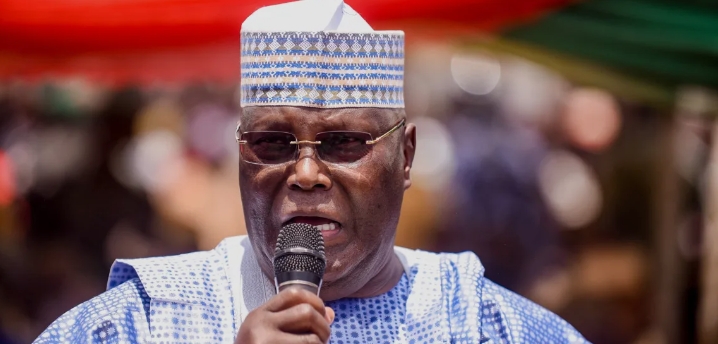
  The Presidency has responded to former Vice President Atiku Abubakar’s promise to “open the borders” if elected president, stating that Nigeria’s land borders are already open. The Presidency made this known in a statement on Friday by the Special Adviser to the President on Media and Public Communication, Sunday Dare, titled, “Atiku and the Borders: Nigerians Deserve Facts, Not Campaign Slogans.” According to the Presidency, the Federal Government reopened most of the country’s land borders on March 14, 2024, and has not reversed the decision. “The facts are straightforward: Nigeria’s land borders are already open,” the statement said. BBNaija ‘Show Ya Sef’ Week 5: Biggie’s Gambit Shakes Things Up, Sheba and Tram Fall Out0:00 / 0:00 “It is therefore difficult to understand which borders the former Vice President intends to ‘open’ when the borders are already open. On February 14, 2026, President Tinubu opened the Kamba borders in Kebbi State, with attendant economic and diplomatic gains.” The Presidency said if Atiku was referring to relaxing existing border controls, Nigerians deserved an explanation of the specific controls he intended to remove and the safeguards his administration would put in place. “If he means he would relax existing border controls, then Nigerians deserve to know precisely which controls he intends to remove, why he considers their removal necessary, and what safeguards his administration would deploy against terrorism, arms trafficking, smuggling, human trafficking, and other forms of transnational organised crime,” it said. The statement stressed that opening borders did not mean removing security controls. “This distinction is fundamental. “But of course, Atiku is unhinged now, and he would say or announce anything to attract and deceive the politically gullible. “An open border is not an uncontrolled border. Modern border management is designed to facilitate legitimate movement, trade and economic interaction while preventing criminals and terrorist organisations from exploiting the same channels. Effective border governance therefore requires a combination of immigration control, customs administration, intelligence-sharing, surveillance, technology and coordinated security operations.” The Presidency said the issue was particularly important given Nigeria’s security environment and its links with developments across the Sahel and the Lake Chad Basin. “This is particularly important for Nigeria because our northern security environment cannot be divorced from developments across the Sahel and the Lake Chad Basin. “As Atiku rightly acknowledged, Nigeria shares borders with Niger, Chad, and Cameroon. While the region continues to confront terrorism, violent extremism and transnational organised crime have proven to be domestic disturbances that have found border porosity as a channel for their export to other countries.” The Presidency cited the Global Terrorism Index 2026 in arguing for effective border management. “The security reality is compelling. The Global Terrorism Index 2026 indicates that approximately 41 per cent of terrorist attacks occur within 50 kilometres of an international border, while about 64 per cent occur within 100 kilometres. Borderlands are particularly vulnerable where difficult terrain, limited state presence and weak coordination create opportunities for terrorist organisations to operate.” It added, “The implications for Nigeria are obvious. As domestic insurgencies evolve into increasingly networked and transnational terrorist threats, effective border management becomes an indispensable component of national security. Terrorists and criminal networks exploit sovereign boundaries precisely because security forces cannot simply pursue them across international borders without appropriate cooperation and legal frameworks.” The Presidency said Nigeria’s security operations along the Northeast and Northwest corridors should not be mistaken for closed borders. “Consequently, Nigeria’s focus on the Northeast and Northwest corridors, including the coordinated deployment of the Armed Forces and other security institutions, should not be misconstrued as evidence of closed borders. It reflects responsible border security.” It also challenged Atiku to provide more details on his proposed border policy. “The former Vice President, as an experienced politician who has previously occupied the second-highest office in the country, should know this distinction. “While political contestation is legitimate in a democracy, statements about national security and the Nigerian economy should be grounded in facts, institutional understanding, and a credible alternative policy agenda.” The Presidency said what Nigerians should expect from a presidential candidate was a detailed policy proposal rather than a general pledge to open borders. “What Nigerians should reasonably expect from a presidential aspirant is not a slogan about ‘opening borders,’ but a detailed explanation of how his administration would improve border surveillance, strengthen intelligence-sharing with neighbouring states, modernise customs and immigration operations, deploy technology, protect border communities and deepen regional cooperation against terrorism and organised crime.” Dare said the Tinubu administration remained open to scrutiny but insisted that such scrutiny should be based on facts. “President Bola Ahmed Tinubu’s administration remains open to scrutiny and should be judged by measurable outcomes in security, economic recovery, border management and citizens’ welfare. But such scrutiny must be based on facts.” The Presidency further said, “Nigeria’s borders must be open to legitimate commerce and movement, but secure against terrorists and criminals. They must be monitored with technology, led by intelligence, and integrated into the country’s broader national-security and economic strategy. “That is the policy conversation Nigerians deserve.” The statement concluded with a broader criticism of Atiku’s campaign approach, asking what new policy direction he intended to offer Nigerians. It concluded, “But, increasingly, the former Vice President’s public outings and policy pronouncements raise a more fundamental question: what new and credible contribution does he intend to make to Nigeria’s development that is not already contained in the reform trajectory of the present administration? “Rather than presenting Nigerians with a coherent alternative, Atiku appears increasingly preoccupied with promising to reverse, reopen, or rename initiatives already being implemented.”

Presidency Confirms 15% Fuel Tariff, Says Policy Will Boost Local Refining

Presidency Confirms 15% Fuel Tariff, Says Policy Will Boost Local Refining

The Presidency on Friday confirmed that President Bola Tinubu has approved a 15 per cent import tariff on petrol and diesel, describing the policy as a strategic step to stimulate local refining and strengthen Nigeria’s energy independence. According to a statement by the Special Adviser to the President on Media and Public Communications, Sunday Dare, on his official X handle on Friday, the new policy is “a bridge, not a burden,” aimed at transforming Nigeria’s petroleum landscape and securing long-term economic stability. He described the policy as a strategic measure to end Nigeria’s dependence on imported fuel and accelerate the country’s path to energy self-sufficiency. “It’s no longer news that President Bola Ahmed Tinubu has approved a 15 per cent import duty on petrol and diesel, a bold and strategic move aimed at reshaping Nigeria’s energy landscape,” Dare wrote. He explained that for years, Nigeria had depended heavily on imported fuel despite being one of the world’s leading crude oil producers, a situation that drained foreign exchange, hindered job creation, and stifled local refining investments. “For years, the nation has depended heavily on imported fuel despite being a leading crude oil producer, draining foreign exchange and exporting jobs that should have been created at home. This new policy is designed to reverse that trend by encouraging local refining, boosting domestic capacity, and ensuring that Nigeria’s oil wealth translates directly into national prosperity,” the statement added. Dare said the policy seeks to make imported products less competitive while tilting the market in favour of locally refined fuel from the Dangote Refinery, Port Harcourt Refinery, and modular plants under construction across the country. “By making imported fuel less competitive, the government is tilting the market in favour of local refineries such as Dangote and other modular plants, laying the groundwork for a self-sustaining and resilient energy sector,” he stated. He added that as domestic refining ramps up, supply will strengthen, and pump prices are expected to stabilise over time. The policy, according to him, will also stimulate industrial activity, create jobs, and attract fresh investments into the downstream petroleum value chain. “As local refining ramps up and supply strengthens, prices are expected to moderate while jobs, investment, and industrial activity expand. This policy is therefore not a burden, but a bridge, from dependence to independence, from vulnerability to strength,” Dare said. The presidential aide’s comment marks a departure from the position of petroleum marketers, who have warned that the pump price of Premium Motor Spirit, popularly known as petrol, could rise above N1,000 per litre following President Bola Tinubu’s approval of a 15 per cent ad-valorem import tariff on fuel imports. The new policy, which takes effect after a 30-day transition period expected to end on 21 November 2025, is part of the government’s strategy to protect local refiners and reduce the influx of cheaper imported products that threaten domestic refining investments. PUNCH Online had earlier reported that Tinubu approved the introduction of a 15 per cent ad valorem import duty on petrol and diesel imports into Nigeria. In a letter dated October 21, 2025, reported publicly on October 30 2025, and addressed to the Attorney-General of the Federation and Minister of Justice, the Federal Inland Revenue Service and the Nigerian Midstream and Downstream Petroleum Regulatory Authority, Tinubu directed the immediate implementation of the tariff as part of what the government described as a “market-responsive import tariff framework.” However, marketers say the move could backfire and push retail prices beyond the reach of average Nigerians. Commenting in a telephone interview on Thursday, multiple depot operators with knowledge of the matter, who spoke on condition of anonymity, said the decision could further raise the price of petrol, which already sells for around N920 per litre, in many parts of the country. “As it is, the price of fuel may go above N1,000 per litre. I don’t know why the government will be adding more to people’s suffering,” one of the depot operators said. The National Vice-President of the Independent Petroleum Marketers Association of Nigeria, Hammed Fashola, also agreed that the tariff had its implications, saying it might lead to a price surge. Fashola said the policy had both positive and negative effects, adding that it could discourage importation while promoting local refining. The IPMAN leader opined that some marketers might perceive it as an opportunity to monopolise the sector in favour of Dangote and a few other refineries. “The 15 per cent tariff on imported fuel has its own implications. Maybe the price will go up, and equally, it will discourage importers from bringing in fuel if it becomes too costly. “But it has both negative and positive effects on the sector. I see that the government is trying to protect local refiners, but it will have its own implications because people will see it as a way of monopolising the industry for certain people. At the same time, the government aims to protect the local refiners.” PUNCH Online reports that the latest data from the Nigerian Midstream and Downstream Petroleum Regulatory Authority indicate that petrol imports still accounted for about 69 per cent of the country’s total fuel demand over the 15 months between August 2024 and October 10, 2025.

2027: Hon Segelu Supports Call On Makinde To Contest Presidency

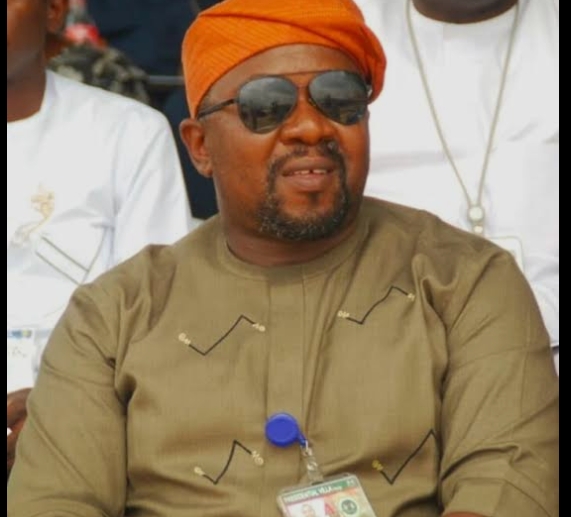
  A gubernatorial aspirant under the umbrella of the Peoples Democratic Party (PDP) for the 2027 elections, Hon. Olayinka Oladimeji Segelu has reiterated his support for the call on the Oyo State Governor, Engr. Seyi Makinde of Peoples Democratic Party (PDP) to vie for the presidential seat in 2027. According to Hon Segelu, Makinde represents a generational shift in Nigerian politics, resonating with the younger population. As one of Nigeria’s prominent PDP leaders, the Germany-based business tycoon, politician and IT professional, has established a nationwide network that could support a presidential bid. He said although Governor Makinde has not declared to partake in the 2027 presidential race, he is widely recognized for his commitment to public service and developmental governance in Southwest Nigeria. He further noted that it would be a significant milestone for the PDP, a party increasingly focused on youth-driven leadership and change, if Makinde decides to pursue higher office like the presidency in 2027. The governorship hopeful applauded the incumbent Oyo helmsman for generously donating a secretariat to the South West PDP. He said Makinde’s leadership in celebrating the contributions of past leaders dedicated to serving the people was laudable. “I would like to commend Governor Makinde on the recent commissioning of the South West PDP Party Secretariat, named in honour of the late Hon. Soji Adagunodo, a former Osun State Chairman and National Vice Chairman of our party. “It is gratifying to see that our amiable governor is fulfilling his honour the late South West Zonal Leader with a new edifice as the secretariat of the PDP in the southwestern zone of the country, for his contributions to the growth of the party,” Hon Segelu said. Son of a founding member of the PDP who was the first Executive Chairman of the Party in Oyo State gruesomely murdered by assassins, late Hon. Olusegun Moses Akintola Oladimeji, Hon Olayinka Segelu, noted that “His decision to dedicate this secretariat to Late Hon. Soji Adagunodo, known for his unwavering dedication to the PDP, is highly commendable. Naming this building after such a prominent leader honours Adagunodo’s memory and serves as a reminder of the values of service, loyalty, and commitment to the party’s mission. “The newly commissioned South West PDP Secretariat, with its modern infrastructure and strategic location, is a valuable asset for our party in the South West region. This initiative exemplifies Governor Makinde’s visionary approach to strengthening the PDP’s organizational framework and fostering unity. “By investing in this facility, Governor Makinde has established a dedicated space for collaboration, planning, and capacity-building among PDP leaders and members in the South West. His commitment to the growth and unity of our party is commendable.” Hon. Olayinka Segelu expressed confidence that Governor Makinde’s actions will inspire all party members to remain loyal, dedicated, and willing to make sacrifices for the PDP. “It’s crucial that we recognize and honor past leaders who dedicated themselves to the party’s ideals, fostering a culture of respect and continuity within the party. Late Hon. Adagunodo was indeed a bridge-builder whose legacy endured, and this monument stands as a testament to his greatness. The secretariat will undoubtedly enhance grassroots political engagement, unity, and growth within the PDP, a remarkable achievement made possible by Governor Seyi Makinde’s generosity,” he further remarked. Hon. Segelu encouraged all party members to fully utilize the resources available at the new secretariat to pave the way for a stronger future for the PDP.