Ondo Nurses Declare Seven-Day Warning Strike, Halt Patient Care

  The National Association of Nigeria Nurses and Midwives, Federal Medical Centre, Owo chapter, has declared that it will not attend to any patient during its ongoing seven-day warning strike, regardless of the severity of cases. Mr. Coker Oluwasegun, secretary of the association, made this known on Thursday in an interview with the News Agency of Nigeria, accusing the Federal Government of neglecting the welfare of nurses. “It is total compliance—no leeway whatsoever,” he said. “The Federal Government has unfairly treated nurses over the years, and this is the time for us to take the bull by the horns. “This action is not against the management of FMC Owo, as we have already informed the Medical Director and his team.” Oluwasegun lamented poor remuneration and working conditions, noting that the uniform allowance has remained N20,000 per year for over two decades. “In all other allowances, nurses receive the least, despite being the backbone of the health sector. There’s a lack of equipment in most hospitals, making patients wrongly assume we are responsible for poor outcomes. The working conditions are deplorable,” he added. He cited a string of unfulfilled promises by the Federal Government and reiterated that the warning strike would last seven days. “If our 12-point demands are not met, we will resume after the warning strike and issue a 21-day ultimatum, after which an indefinite strike will commence,” Oluwasegun stated. Punch

(PHOTOS)AI Revolution Takes Centre Stage As Medical Experts Convene In Ibadan For NAPGHAN 2025 Scientific Conference

  The 11th Annual General and Scientific Conference of the Nigerian Association of Paediatric Gastroenterology, Hepatology and Nutrition (NAPGHAN) kicked off in Ibadan, Oyo State, drawing experts from across Nigeria and beyond to explore the transformative impact of Artificial Intelligence (AI) on child health. The keynote speaker, Professor James Renner, Professor of Paediatrics at Babcock University College of Medicine and Health Sciences, delivered a powerful and inspiring message that set the tone for the conference. Speaking on the transformative power of Artificial Intelligence (AI) in child health, he said, “When we speak of a revolution in medicine, we don’t mean smoke-filled streets or manifestos. This is a revolution made not by crowds, but by code. Quiet, yet powerful. Not loud, but lasting. Not chaotic, but creative. And it is only just beginning.” Professor Renner outlined the evolving role of AI in paediatric gastroenterology, hepatology, and nutrition, stressing that AI is not just a tool but a fundamental shift in how healthcare is approached, delivered, and experienced. He detailed how AI is already improving diagnostic accuracy, personalising nutrition through genomics and microbiome analysis, and enhancing remote monitoring through mobile applications for feeding practices and symptom tracking. He stated emphatically: “AI is with us. We cannot shy away from it. But we must use it sensibly, with ethical responsibility and scientific clarity. AI must not mislead us; rather, it must guide us to be better, faster, more precise—without losing our human compassion.” He added that every child deserves access to the benefits of AI, calling on the government and healthcare institutions to embrace the technology in full support of the Nigerian child. “In the last eight months alone, over ten countries have adopted AI-driven systems in paediatric care. We must not be left behind,” he warned. The conference, hosted for the first time in the South-West Zone, was declared open with a warm welcome from the Chairperson of the Local Organizing Committee, Dr. Joyce Akinseinde, who described it as a landmark event and a personal honour. She welcomed dignitaries including the Honourable Commissioner for Health, Oyo State, Dr. Oluwaserimi Ajetunmobi (represented); Chief Host and CMD of UCH, Professor Jesse Abiodun Otegbayo (represented by Professor Olubukola Adesina); and the host, Prof. Biobele Brown, among other academic and clinical leaders. She called on participants to actively engage with the theme and use the sessions to spark new insights and collaborations. In his presidential address, Professor Felix Olukayode Akinbami, President of NAPGHAN, echoed the urgency of embracing AI, describing it as a “transformative force” with the potential to redefine medical practice. “Artificial Intelligence can enhance diagnostics, personalise treatment plans, and improve patient outcomes. But we must also ask, can it replace the nuances of human judgement, empathy, and experience?” he queried, urging delegates to critically explore these questions during the conference. Prof. Akinbami also announced plans to propose the creation of a national registry for congenital alimentary tract malformations in children, citing the need for real-time data to inform policy and care. He expressed appreciation to Prof. Otegbayo for hosting the conference free of charge and for approving the acquisition of a paediatric endoscope for the newly accredited unit in the Department of Paediatrics at UCH—a major win for child health services in Nigeria. Representing Prof. Otegbayo, Prof. Olubukola Adesina, Chairman of the Medical Advisory Committee, noted that UCH remains committed to promoting innovation and advancing research in paediatric healthcare. “AI must be an enabler, not a barrier,” he cautioned, emphasising the need for data security, ethical compliance, and capacity building among healthcare workers. Co-chairperson of the LOC, Dr. Virginia Guvoeke, underscored the relevance of the theme, describing the event as an opportunity to reaffirm the association’s commitment to gastrointestinal health for Nigerian children. “AI has come to stay. It is changing how we manage our patients, and we are optimistic that with government support, we can do more,” she said in an interview. Also speaking at the event, Professor Iyabo Runsewe-Abiodun, logistics chairperson and advisor, encouraged participants to fully engage with the presentations and translate the knowledge gained into practical clinical impact. “The world is tending towards AI, and so is medicine. We must not be left behind,” she stressed. Among other distinguished attendees were Dr. Akinfemi Akinyode, Permanent Secretary, Oke Ogun Health Zone 1 (representing the Oyo State Health Commissioner); Dr. Tomi Coker, Honourable Commissioner for Health, Ogun State, represented by Dr. Ogunsilu Esther, Director of Primary Health Care System Development, Ogun State; and Dr. Wole Oyeyemi, Director of Administration, UCH. The scientific sessions and workshops of the conference will focus on topics such as inflammatory bowel disease, chronic liver disease, diagnostic challenges in resource-limited settings, and nutrition therapy. The conference promises not only intellectual enrichment but opportunities for professional networking, collaborations, and long-lasting partnerships in paediatric gastroenterology across Nigeria and beyond. With Professor James Renner’s passionate call to action and the collective commitment of healthcare leaders, NAPGHAN 2025 has set a new pace in aligning child health with global technological advancement. “This is not just a conference,” Prof. Renner concluded. “It’s a beginning. Let us make sure every Nigerian child benefits from this AI revolution.”


Oyo Govt Approves Homegrown Scheme Of Service For Community Nursing, Midwifery Cadres

  The Oyo State Government has approved a Homegrown Scheme of Service for Community Nursing Superintendent and Midwifery cadres, covering Grade Levels 06 to 14, within the state’s civil/public service. This new scheme is designed to standardize career progression and improve the quality of care provided by these essential healthcare professionals. The Commissioner for Establishments and Training, Prof. Salihu Adelabu, who affirmed that the approval is a testament to the government’s commitment to strengthening grassroots healthcare delivery and professionalizing the roles of frontline health workers. The approved cadres will be reflected in the 2025 Establishments Estimate of relevant Ministries, Departments, and Agencies (MDAs) across the state civil and public service. This inclusion is aimed at ensuring proper recognition, budgeting, and deployment of personnel under the new structure. According to Prof. Adelabu, the newly approved Homegrown Scheme of Service outlines a structured career path, with clearly defined duties, qualifications, and promotional prospects for officers in the community nursing and midwifery cadres. He said it is designed to promote efficiency, job satisfaction, and long-term retention of trained healthcare professionals in the state. He further stated that the implementation is to commence immediately, with administrative coordination to be handled by relevant government agencies and departments. The government urges all officers within the newly structured cadres to embrace this development as a platform for renewed commitment, professional advancement, and enhanced service to the people of Oyo State.

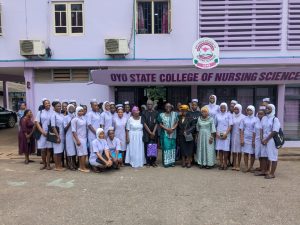
Oyo Govt Issues Appointment Letters To 116 Staff of Oyo College of Nursing

…Confirms Substantive Roles of Principal Officers. ..as Set X Donates Furniture for Students The Oyo State Government has approved the issuance of appointment letters to 116 key staff members across various cadres, to address critical academic vacancies at the Oyo State College of Nursing and Midwifery, Eleyele, Ibadan. It also approved substantive positions for four principal officers, including the Registrar, Librarian, Bursar, and the Director Works. The developments were disclosed by the Provost, Oyo State College of Nursing, Dr. Gbonjubola Owolabi on Thursday during a donation of furniture by the 1976-79 set of the College. The approved cadres, according to the Provost, include Legal Advisers, Senior Lecturers, Sickbay Nurses, GNS Lecturers, Administrative officers. Others are: Higher Executive officers, Higher store officers, Assistant Executive officers, Computer Analysts, Higher Technical Officers, Motor Drivers, Craftsmen, and Clerical officers. Owolabi highlighted Governor Seyi Makinde’s unwavering support for the College in all ramifications, adding that the furniture will go a long way, as the college has increased in number. She also announced that the college received full accreditation from the Nursing and Midwifery Council of Nigeria for key programmes, following the September/October 2024 accreditation. According to her, “the College of Nursing and Midwifery, Eleyele, Ibadan is progressing steadily, notably through its development of an online student clearance platform, which eliminates the need for physical presence during clearance processes.” Also speaking on behalf of the set, also known as Set X, Elder Emmanuel Kunle Oladejo applauded the College’s provost on the giant strides recorded. He urged the Provost and other Principal officers to work towards realizing a dream of making the College a degree-awarding institution. Elder Oladejo also urged the students to work hard for excellence and take a cue from others who have excelled in their chosen careers.

Oyo College Of Nursing Partners NGO To Tackle Sexual Harassment

  The Oyo State College of Nursing and Midwifery, Eleyele, Ibadan and the Gender Mobile Initiative (GMI) are set to sign a Memorandum of Understanding (MoU) to aggressively tackle cases of sexual harassment suffered by students at tertiary institutions across the nation. This was revealed by the Provost, Dr. Gbonjubola Owolabi after a meeting with representatives of the National Board for Technical Education, NBTE, and GMI at the College’s conference room on Tuesday. The meeting, which was witnessed by the management team of the institution, agreed to make a measurable impact in reducing or eradicating all forms of sexual harassment at the college. Speaking on behalf of the Provost, the Deputy-provost, Mrs. Iyabo Adeleke said the MoU aims to strengthen existing efforts to prevent sexual harassment, including through policy development, capacity building, and promoting awareness. “The initiative is critical to upholding the dignity and rights of our students and staff, and so we key into this policy,” she said. She said that the College under the watch of Dr. Owolabi had zero tolerance for sexual harassment, abuse of office, and other forms of corrupt practices. The Executive Secretary, National Board for Technical Education, NBTE, Prof. Idris Bugaje said the board, in collaboration with a non-governmental organisation, Gender mobile initiative, is committed to fostering safe, inclusive, gender-friendly, and harassment-free learning environments across all tertiary institutions, under NBTE’s purview. He said the policy is sequel to a stakeholder engagement on Sexual Harassment Prevention organised by the Independent Corrupt Practices and Other Related Offences Commission. Represented by Mr. Bello Abdul-hakeem, the Executive Secretary, said the College must constitute an Independent Sexual Harassment Prohibition Committee or a gender-based violence response team to oversee the execution of the policy. The Executive Secretary also mandated the college to work with Gender Mobile Initiative and establish clear report and response mechanisms to address cases of sexual harassment effectively. Speaking on behalf of Gender Mobile Initiative, Ms. Omotunde Blessing said that the anti-sexual harassment policy was jointly designed by ICPC with the support of development partners. She said that the policy involved the use of Campus Pal APP, a discreet online reporting platform with multipurpose resources available for users. Ms. Omotunde said that the platform could be used by students to report cases of harassment for prompt and effective response by the college. She said the NGO will provide mini-grants to the institution to support the technical process of policy design and implementation of the policy. She said the rate of sexual harassment in tertiary education institutions was alarming. Omotunde said, “The situation of sexual harrasment on campuses requires drastic measures to combat. We need to join hands to restore sanity in our education institutions.”

Oyo Govt Begins Upgrade Of 66 PHCs To Boost Healthcare Delivery…Provides Modern Equipment, 10KVA Solar Inverters, Incinerators

  The Oyo State Government has commenced a comprehensive upgrade of 66 Primary Healthcare Centres (PHCs) across the state, equipping them with essential medical tools and alternative power sources to ensure improved healthcare delivery at the grassroots level. Speaking during the distribution of equipment at one of the newly upgraded PHCs in Ibadan on Tuesday, the Commissioner for Health, Dr. Oluwaserimi Ajetunmobi, described the revitalization of the PHCs as a crucial milestone in the government’s efforts to strengthen healthcare at the community level. She said that following the earlier renovation of over 200 PHCs, the administration of Governor Seyi Makinde has embarked on the second phase of its healthcare revitalization plan, distributing modern medical equipment and installing solar-powered systems to guarantee uninterrupted healthcare services. She explained that two facilities in each of the state’s 33 Local Government areas were selected for the current upgrade. She said, “Healthcare is one of the pillars of Governor Seyi Makinde’s administration under Omituntun 2.0. The Oyo State Government has been addressing the infrastructure and personnel gaps in the sector.” “Governor Seyi Makinde continues to fulfill his promises by tackling the non-availability of basic medical equipment and personnel in our health facilities”, she added. She highlighted that following the renovation of the health facilities, the government recruited over 3,000 healthcare workers for PHCs, and has now proceeded with the equipment upgrade in phases. In Phase I, 66 PHCs have been selected based on criteria such as patient load, with the two centres in each local government chosen. The upgrades include: Installation of 10 KVA Solar Inverter Systems with hybrid inverters and lithium batteries to provide 24-hour electricity supply; Provision of two computer tablets (for Medical Records Officers and Officers-in-Charge) equipped with Electronic Medical Records (EMR) software; Installation of Red-Brick Incinerators for safe medical waste disposal. Dr. Ajetunmobi further announced plans to implement a Drug Revolving Fund to ensure a steady supply of essential medicines at the PHCs. She urged community members to take ownership of the facilities and protect them against vandalism. In his remarks, the Managing Director, First Health Dynamic Synergy International Limited, Professor Temitope Alonge, whose organization executed the upgrades, explained that the selection of PHCs was based on population served. “No more excuses in our primary healthcare centres. The state government has made provision for basic medical equipment for the use of medical personnel at their facilities,” he said. At the Olorisa-Oko PHC in Akinyele Local Government, the council chairman, Hon. Akinwole Akinleye, expressed gratitude to Governor Makinde for prioritizing healthcare at the grassroots level. He pledged the local government’s continuous support, including providing adequate security for staff, facilities, and equipment. Among the first facilities to benefit from the upgrade is the Odo-Ona Elewe PHC in Oluyole Local Government. The medical equipment provided includes: Standing Mobile and Table-Top Electronic Sphygmomanometers; Pediatric Blood Pressure Cuffs;Glucometers; Haemoglobinometers; Infrared Thermometers; Bucket Autoclaves powered by gas cookers; Autoclave tapes and drums; Colour-coded dustbins and metal dustbin racks; Medical oxygen cylinders with accessories; Nebulizers; Pulse oximeters; Point-of-Care Testing (POCT) Kits (HIV/Syphilis RDT, HBSAG RDT); First Aid Boxes for POCT storage; Filling of oxygen and cooking gas cylinders; Adjustable spanners for oxygen cylinders. With these upgrades, the Oyo State Government continues to demonstrate its unwavering commitment to improving healthcare access and quality for all residents of the state.

World Sickle Cell Day: Oyo Govt Re-Affirms Commitment To Quality Healthcare Delivery …as Over 300 participants received free medications

  On World Sickle Cell Day, Oyo State Government has reaffirmed its commitment to providing quality healthcare for its citizens, especially individuals living with Sickle Cell Disease (SCD). World Sickle Cell Day, observed globally on June 19, serves as a vital platform for raising awareness and improving understanding of the challenges faced by individuals living with sickle cell disease. Speaking at a sensitization event held at Ikolaba High School, Ibadan, the Commissioner for Health, Dr. Oluwaserimi Ajetunmobi, explained the importance of early detection, enhanced access to medical care, and community awareness in reducing the burden of the disease. She emphasized that the state’s healthcare reforms are deeply rooted in the principles of universal health coverage and equity, ensuring that conditions such as SCD remain a consistent priority. The event, organized in collaboration with a Non-governmental Foundation, brought together patients, families, and students across the city. Dr. Ajetunmobi explained that the state government’s strategy for addressing Sickle Cell Disease includes strengthening newborn screening for early diagnosis, expanding access to vital medications such as hydroxyurea and folic acid, and integrating SCD clinics into all levels of healthcare from primary to tertiary facilities. She also stressed the need for accurate health data, which has led to the development of sickle cell disease registries to better understand and respond to disease trends. Ajetunmobi noted that these efforts reflect Governor Seyi Makinde’s broader vision for a robust and inclusive healthcare system in Oyo State. She added that under his administration, several transformative initiatives have been implemented, including the Omituntun Free Health Mission, which continues to provide comprehensive free healthcare across all 33 local government areas. Dr. Oluwaserimi Ajetunmobi explained that the mission targets vulnerable groups such as children under five and the elderly, while also offering free surgical services. She hinted that more than 200 primary healthcare centres have been renovated, 150 others are currently undergoing upgrades, and over 3,000 health workers have been employed to improve service delivery. “Through the Oyo State Health Insurance Agency (OYSHIA), more than 400,000 residents now have access to affordable and consistent healthcare”. Ajetunmobi said. She urged citizens to take personal responsibility for their health by knowing their genotype, seeking early diagnosis, adhering to prescribed treatments, and embracing genetic counselling to make informed reproductive choices. The Commissioner also encouraged policymakers to maintain and increase support for sickle cell programmes across the state. Over 300 participants received free medications, and many also benefited from immediate health education and counselling services.

Oyo Gov’t, UNICEF Host High-Level Advocacy Meeting With S’west Information Ministries

  In a landmark effort to advance children-centred advocacy and effective communication for childrens’s right actualization, Oyo State Government in partnership with the United Nations Children’s Fund (UNICEF), convened an advocacy dialogue and capacity-building meeting with the Commissioners, Permanent Secretries and top officials from the Ministries of Information across the Southwest states of Nigeria. The event, themed “Scaling Results for Children Through Evidence-Based Social and Behavioural Change,” was held at Orchid Hotel, Ikota-Lekki, Lagos State. It brought together key stakeholders to explore strategic approaches to drive positive social change, promote children’s rights, and advance gender equity through effective communication practices and evidence-based policy alignment. Representing the Commissioner for Information and Orientation, Oyo State, Prince Dotun Oyelade, the Permanent Secretary, Mr. Rotimi Babalola, in his keynote address, emphasized that success would be measured not just by policies or meetings, but by real outcomes, well-nourished children, access to clean water and protection from vaccine-preventable diseases. According to Oyelade, “The wellbeing of women and children through three fundamental pillars of public health—Nutrition, Water Sanitation and Hygiene (WASH), and Immunization—are interlinked and vital to the survival, growth, and development of our communities.” He stressed the need for strategic communication, advocacy, and community engagement on social and behavioral change. “We must ensure our messages are clear, culturally relevant, and widely disseminated. We must amplify grassroots voices and empower programs that drive behavior change,” he said. “As Commissioner for Information, I am reminded of the power and responsibility that communication holds in the success of any public health intervention. Our communities can only benefit from nutrition programs if they are aware of them. Clean water and sanitation will only be effective when people understand and adopt good hygiene practices. Immunization will only reach its full potential if families trust and accept it.” Oyelade thanked UNICEF for its continued support through technical expertise and resources. He urged participants to be bold in ideas, open to collaboration, and relentless in their commitment to service. “Together, we can build a healthier, more resilient future for all,” he concluded. In his remarks, UNICEF’s Chief of Social and Behaviour Change, Abuja, Kshitiy Joshi, emphasized the urgency of rethinking communication as a tool for transformation “The world is changing everyday,” he declared. He highlighted the importance of data-driven, people-centered communication in shaping public attitudes and behaviors. “We must go beyond awareness to action—addressing deeply rooted norms, influencing behaviors, and ensuring that no child is left behind.” Joshi further noted that sustainable development for children cannot be achieved without the active involvement of Ministries of Information, who play a critical role in shaping public discourse and influencing societal behavior at scale. In his welcome address, the Permanent Secretary, Ministry of Information and Orientation, Oyo State, Mr. Rotimi Babalola, represented by Director of Press and Public Relations, Mrs. Bukola Bakare, reiterated the meeting’s goal to improve the wellbeing of women and children and ensure that every child survives, thrives, and grows up in a safe and nurturing environment. “Essential family practices are simple yet powerful actions that families can take to improve children’s health, nutrition, and development,” he said. “From exclusive breastfeeding and handwashing with soap to proper home care for illnesses and timely immunizations, these practices, when consistently adopted, save lives and lay the foundation for a productive and healthy life.” In their separate goodwill messages, the Commissioner for Information and Public Enlightenment, Osun State, Barrister Kolapo Alimi; Special Adviser to the Ogun State Governor on Media and Communication, Hon. Kayode Akinmade; Permanent Secretary, Ministry of Information, Ekiti State, Prince Olusesan Alabi; Permanent Secretary, Ministry of Information and Strategy, Lagos State, Mr. Olunde Sogunle; and Administrative Secretary, Ministry of Information and Orientation, Ondo State, Mr. Olanrewaju Akarakiri, commended UNICEF’s strategic role in promoting inclusive communication and policy engagement that prioritizes the welfare of children and women. They described UNICEF as a trusted partner in progress, whose interventions have significantly impacted communities across the region. The representatives reaffirmed their states’ readiness to partner with UNICEF on future initiatives aimed at improving the lives of children and vulnerable populations in the Southwest.

Adekunle Gold Launches Free Health Insurance For 1,000 Sickle Cell Warriors In Lagos

  In celebration of World Sickle Cell Day 2025, Nigerian Afropop star Adekunle Gold has unveiled a life-changing initiative through his charity, the Adekunle Gold Foundation. The project, named “5 STAR CARE,” offers free health insurance coverage to 1,000 individuals living with sickle cell disorder in Lagos State. The 5 STAR CARE program was officially announced by the music icon and sickle cell advocate, Adekunle Gold, on Wednesday, June 19, 2025. He described the initiative as a deeply personal mission inspired by his own journey with sickle cell disease. “Today is World Sickle Cell Day. This year, through the Adekunle Gold Foundation, we are launching a programme called 5 STAR CARE – a free health insurance scheme for 1,000 people living with sickle cell in Lagos, Nigeria,” Adekunle Gold shared via social media. The program is being implemented in partnership with the Lagos State Ministry of Health and the Sickle Cell Advocacy and Management Initiative (SAMI) – two key stakeholders in healthcare and sickle cell awareness in Nigeria. “Our goal is simple,” he continued. “To ease the financial burden of managing sickle cell and help more people get the quality care they deserve without stress.” Adekunle Gold, born Adekunle Kosoko, has been an outspoken advocate for sickle cell awareness, often sharing his personal story of resilience and survival as someone living with the disorder. “As somebody who has walked this path, I know how powerful it is to have the right support,” he said. “This is just the beginning.” The 5 STAR CARE health insurance package aims to cover essential medical needs for beneficiaries, including consultations, medications, and crisis management services, ensuring access to consistent and affordable care for sickle cell patients who often face huge financial and emotional burdens. To apply for the free health insurance program, eligible individuals are encouraged to visit www.adekunlegoldfoundation.com/5starcare The launch of the initiative has sparked praise from fans, health advocates, and members of the sickle cell community nationwide, many of whom see it as a rare show of commitment from a celebrity to a cause that directly affects them. World Sickle Cell Day is observed annually on June 19 to raise awareness about the disease, promote early diagnosis, and support individuals and families affected by the inherited blood disorder. In Nigeria, which has the highest burden of sickle cell in the world, such initiatives are especially vital.

NCDC Confirms Surge In Lassa Fever Cases

  Lassa fever is surging again across Nigeria, with the Nigeria Centre for Disease Control and Prevention confirming a higher death rate and more infections despite ongoing public health interventions. In its latest Situation Report for Epidemiological Week 22 (May 26 to June 1), on Friday, the NCDC said eight new confirmed cases were recorded in Ondo, Bauchi, Edo, and Nasarawa states, representing a slight rise from six cases reported in the previous week. It said that so far in 2025, Nigeria has reported 747 confirmed cases and 142 deaths, marking a case fatality rate of 19.0 per cent a concerning increase from 18.1 per cent recorded during the same period in 2024. The disease has now spread across 18 states and 96 local government areas, with five states Ondo, Bauchi, Edo, Taraba, and Ebonyi, accounting for a staggering 91% of all confirmed infections.   Although the agency said there were no new infections among healthcare workers in the reporting week and no probable cases, challenges persist. Meanwhile, experts continue to raise concerns over late presentation of cases, poor sanitation in endemic communities, and limited health-seeking behaviour, all of which hamper effective containment. Health authorities said that the response efforts have been intensified. The NCDC said it has deployed rapid response teams, launched community sensitisation campaigns, and activated an e-learning platform to train health workers on infection prevention and control. Speaking on the resurgence, a public health expert, Dr Solomon Chollom, noted that the rise in cases signals a need for more grassroots surveillance and environmental hygiene education. “We can’t fight Lassa with hospital efforts alone. The communities must be empowered to understand how this disease spreads, mainly through contact with rodent urine or faeces and what they can do to prevent it,” Chollom said. He said that Lassa fever, a viral haemorrhagic illness, is endemic in Nigeria and typically spikes during the dry season “However, the year-round transmission pattern seen in recent years suggests a shift in the disease’s behaviour, likely linked to urbanisation, climate factors, and persistent gaps in sanitation,” he said. The agency also noted that young adults between 21 and 30 years remain the most affected age group, indicating the need for targeted public education in schools, marketplaces, and workplaces. In response, experts were urging state governments and local councils to invest in waste disposal systems, community health surveillance, and early case reporting mechanisms. The News Agency of Nigeria, reports that as Nigeria continues its battle against multiple public health threats, including cholera and Mpox, the ongoing Lassa fever outbreak is a stark reminder of the country’s fragile health security infrastructure and the need for collective, coordinated action. Meanwhile, Lassa fever can also spread from person to person through bodily fluids, contaminated objects, or infected medical equipment. Symptoms include fever, sore throat, headache, vomiting, muscle pain, and in severe cases, bleeding from body openings. (NAN)