
Over 60% Of Corruption Cases Involve Diversion Of Healthcare, Infrastructure Funds—ICPC

  The Chairman of the Independent Corrupt Practices and Other Related Offences Commission, Musa Aliyu (SAN), has revealed that over 60 per cent of corruption cases investigated by the commission involve the diversion of public resources meant for critical projects such as healthcare and infrastructure. Aliyu made this disclosure on Thursday during a stakeholders’ meeting in Abuja to formally introduce the commission’s Accountability and Corruption Prevention Programme for Local Governments According to him, the initiative aims to curb corruption, financial mismanagement, and governance deficiencies in Nigeria’s 774 local councils. “Local governments play a vital role in delivering public services. However, many have struggled due to weak transparency mechanisms and the misappropriation of funds. “This initiative is urgent—over 60% of corruption cases investigated by ICPC at this level involve the diversion of public resources meant for critical projects such as healthcare and infrastructure,” Aliyu stated. He highlighted the significance of the Supreme Court’s July 11, 2024, judgment, which affirmed financial autonomy for local governments. Aliyu assured all that the ICPC remains committed to enforcing compliance with anti-corruption laws while fostering transparency, accountability, and efficiency in local government administration. Explaining the benefits of the programme, he said the ACPP-LG is designed to improve financial management, governance standards, and proactive disclosure in local councils. “Key objectives include: Ensuring transparency in local government operations. Facilitating proactive disclosure of financial and administrative activities. Enhancing citizen engagement in governance. Training local officials on ethical governance. Leveraging technology for transparency. Promoting collaboration between local governments and development partners. Establishing monitoring mechanisms for governance performance and Encouraging inclusive participation in decision-making,” Aliyu noted. He added that to achieve these goals, the ICPC would utilise its investigative, prosecutorial, and regulatory functions to ensure compliance through legislative enforcement, periodic audits and oversight mechanisms to detect and address non-compliance. Aliyu added that state governments must support local councils to ensure the smooth implementation of these reforms without administrative bottlenecks. Beyond preventive measures, Aliyu reaffirmed the commission’s commitment to prosecuting cases of fund diversion. He stressed that offenders would face the full weight of the law, ensuring that public resources are utilised for their intended purposes. “Beyond these preventive measures, ICPC will not hesitate to prosecute cases of fund diversion, ensuring that offenders face the full weight of the law. The ACPP-LG is not just about governance reform—it is about justice, deterrence, and ensuring that public resources serve the people as intended. “The fight against corruption at the grassroots level is a fight for Nigeria’s future. Let us work together to ensure that every kobo meant for development is used for the people,” he said. Punch
One Nigerian Dies Of TB Every Seven Minutes -Oluremi Tinubu

  Nigeria’s First Lady, Senator Oluremi Tinubu on Monday said one person dies of Tuberculosis every seven minutes despite it being a preventable and curable disease. Tinubu stated this at a community outreach in Sauka, Abuja to commemorate the 2025 World TB Day themed, ” Yes! We Can End TB: Commit, Invest, Deliver,” with the slogan, “We fit do am.” World TB Day is commemorated on March 24 annually to raise TB awareness and mobilise efforts, including political commitment to resources and healthcare financing for TB towards elimination. She said, “Beyond being a disease; TB is a national emergency that needs to be addressed urgently because it is preventable and curable. The statistics from the World Health Organisation’s 2024 Global TB Report are alarming. In Nigeria, one person dies of TB every seven minutes. This means that in the short time we will spend at this event, many more lives will be lost, if we do not act swiftly and decisively. “Despite TB being preventable and curable, Nigeria remains one of the top eight countries with the highest burden of TB worldwide. “It is unacceptable that so many of our brothers and sisters still suffer from this disease in silence due to stigma, lack of awareness, and ignorance of not visiting a healthcare facility on time.” She stated that the Federal Government is committed to eradicating TB, through strategic investments in diagnostics, treatment, and prevention. She urged traditional and religious leaders, legislators, the youth, healthcare workers, private sector organisations, non-governmental organisations, community-based organizations, and international partners to join forces in the fight against TB. As the Global and National Stop TB Champion, she reaffirmed her commitment to tackling TB by advocating for more funding, policy reforms, and resource mobilisation to support TB awareness and treatment. She also pledged to amplify the voices of TB survivors, combat stigma and discrimination, and ensure equal access to TB care for women, children, and marginalised groups. “I encourage every Nigerian to join in this fight. TB is curable, and early detection saves lives. Let us work together to remove the stigma surrounding TB, encourage testing, and support those affected. “TB is airborne and since it is contagious, I urge every one of us to get tested, know your TB status, and encourage your loved ones to do the same. If you have a persistent cough for more than two weeks, do not ignore it but rather seek medical help immediately,” she added. In her remarks, the Acting Board Chair, Stop TB Partnership Nigeria, Dr Queen Ogbuji-Ladipo noted that TB is a serious health issue in Nigeria, especially in remote communities, where many people may not have access to TB diagnosis and treatment. Ogbuji-Ladipo said TB is preventable and curable, and treatment is free in government facilities. “Today’s community outreach aims to bring TB information and services closer to the residents of Sauka community so that no one is left behind in the fight against TB. It will also provide platforms for them to learn about TB, ask questions, get tested, and help spread the message that TB can be defeated,” she noted. She highlighted that the Stop TB partnership has made significant progress through strong advocacy and collaboration with various stakeholders. She also advocated increased resource mobilisation and increased funding. “It is more critical than ever to strengthen our advocacy efforts for resource mobilisation to combat TB. Increased funding will ensure better access to prevention, diagnosis, and treatment, ultimately saving lives and improving the well-being of communities,” she added. The Minister of State for Health and Social Welfare, Dr Iziaq Salako emphasised that TB remains a major public health challenge in Nigeria, which ranks first in Africa and sixth globally among high-burden TB countries. “In 2023, an estimated 499,000 Nigerians developed TB, primarily affecting the productive age group (25–44 years), leading to economic hardships. The situation is worsened by stigma, poverty, malnutrition, overcrowded living conditions, and limited access to quality healthcare,” he said. He noted that despite challenges, Nigeria has made significant progress in TB eradication through WHO-recommended strategies. The Country Representative of the World Health Organisation Nigeria, Dr Walter Molumbo pledged the organisation’s commitment to accelerating the TB response guided by its latest guidelines. “We will continue to work with our partners and step up action towards mobilising the needed domestic and international resources required for ending TB in Nigeria. “TB is curable and treatable; I implore anyone coughing for two weeks or more to go for a TB test in the nearest health facility. I call on all stakeholders, yes everyone- the donors, private sector, civil society, Molumbo said. The Sa’Peyi of Garki, Usman Nga Kupi emphasised the need for efforts to eliminate TB globally. “Awareness programmes such as this are a critical need for increased and sustained investment in TB prevention, diagnosis, treatment, and care. “This emphasis is important for translating commitment and investment into tangible results that directly benefit people yet to be infected and already affected,” he noted. Punch

NCDC Confirms UK Returnee’s Lassa Fever Death, Toll Reaches 98

  The Nigeria Centre for Disease Control and Prevention has confirmed the death of a 31-year-old physician who succumbed to Lassa fever after returning from the United Kingdom. The agency also reported that the cumulative number of Lassa fever cases has risen to 535 out of 2,728 suspected cases, with 98 deaths recorded across 14 states in Nigeria as of March 2, 2025. The NCDC, which disclosed this in a public advisory on Sunday, stated, “On March 5, 2025, the Nigeria Centre for Disease Control and Prevention was notified of a confirmed case of Lassa fever by the Ondo State Ministry of Health. The patient, a 31-year-old physician, was managed at a private health facility in Ondo State after returning from a trip abroad (UK). “The patient departed Nigeria on 19/02/2025 and returned on 27/02/2025. Samples were taken late on Friday, 28/02/2025, on suspicion of Lassa fever, but the patient unfortunately passed away in the early hours of Saturday, 01/03/2025. “Laboratory investigation confirmed the result as Lassa fever-positive through PCR testing on Tuesday, 04/03/2025. The patient was reported to have visited his fiancée in Edo State, as well as family and friends, before travelling.” Lassa fever is an acute viral haemorrhagic fever caused by the Lassa virus. The natural reservoir for the virus is the multimammate rat (also known as the African rat), although other rodents can also act as carriers. The public health institute stated that Lassa fever cases occur year-round, with peak transmission periods typically from October to May. “As of Epi-week 9 (February 24, to March 2, 2025), a total of 2,728 suspected cases, 535 confirmed cases, and 98 deaths have been recorded across 14 states in Nigeria, with a case fatality rate of 18.3 per cent. “Five states account for 91 per cent of confirmed cases: Ondo (31 per cent), Bauchi (24 per cent), Edo (17 per cent), Taraba (16 per cent), and Ebonyi (3 per cent). “Ten local government areas make up 68 per cent of confirmed cases, namely: Owo, Akure South, Etsako West, Kirfi, Akoko South-West, Bali, Esan North-East, Bauchi, Toro, and Jalingo.” Meanwhile, to strengthen both national and international coordination efforts, the Ondo State Ministry of Health has intensified control measures, including contact tracing and listing all individuals who had contact with the confirmed case. The NCDC added that all necessary in-country structures had been mobilised to ensure proper monitoring of contacts. Port Health Services are involved in tracing in-flight contacts to bolster surveillance at points of entry, and information has been shared with relevant authorities in line with the International Health Regulations (2005). Contact tracing efforts are also ongoing in the UK. Lassa fever is transmitted through direct contact with the urine, faeces, saliva, or blood of infected rodents; ingestion of food or drinks contaminated with the bodily fluids of infected rats; and contact with contaminated objects, household items, or surfaces. Person-to-person transmission can also occur through contact with the bodily fluids of an infected person, particularly in healthcare settings where infection prevention and control practices are inadequate. Lassa fever initially presents with symptoms similar to other common febrile illnesses, such as malaria. Symptoms include headache, general body weakness, cough, nausea, vomiting, diarrhoea, muscle pains, chest pain, sore throat, and, in severe cases, bleeding from the ears, eyes, nose, mouth, and other body openings. “Early detection, diagnosis, and treatment significantly improve patient survival rates. Prompt reporting of symptoms ensures timely intervention, thereby increasing the chances of survival,” the NCDC stated. Punch

Oyo Govt. Rescues Poly Ibadan Students, After Inhaling Gaseous Substance

  IBADAN – About 10 Students of the Polytechnic Ibadan are now receiving treatment in government hospitals after they inhaled poisonous gas and collapsed on Tuesday. The Oyo State government swiftly responded to the emergency situation at the tertiary institution after receiving a distress call. Upon receiving reports of the incident, the Honourable Commissioner for Health, Dr. Oluwaserimi Ajetunmobi led an immediate emergency response. Affected students were promptly evacuated and transferred to Ring Road State Hospital and the University College Hospital (UCH). Eyewitness accounts revealed that the affected students, who were from the Science Laboratory and Technology Department, were seated in their lecture hall after a course test had been conducted. A fight reportedly broke out between two students, and while others attempted to intervene, an unknown choking substance was released into the air, allegedly sprayed by one of the students. This led to several students collapsing, and some went unconscious. Ten students were affected. Following the intervention, the Commissioner personally visited the hospitals to assess the condition of the students, confirming that they had been stabilized and were receiving appropriate medical care. Dr. Ajetunmobi urged the management of The Polytechnic Ibadan to investigate the incident thoroughly and ensure that those responsible are identified and brought to justice. She also emphasized the need for the institution to organize sensitization programs for students, discouraging acts of violence and harmful behaviour that could jeopardize public safety. She reaffirmed that the Ministry of Health remains committed to ensuring the well-being of all residents of Oyo State and will continue to respond promptly to health-related emergencies. The Rector of Ibadan Polytechnic, Dr. Taiwo appreciated the prompt response of the State Government to the emergency situation and pledged to fish out the perpetrators of the act. In her company were the Permanent Secretary of the Ministry, Dr. Akintunde Ayinde, the Director of Secondary Health Care and Training, Dr. Adekunle Aremu, the Director of Nursing Services, Dr. (Mrs.) Kehinde Oyebode, the Director of Food, Water and Laboratory Services, Mrs. Afusat Akande and the members of the Rapid Response Team.  

World NTDs Day: “We’ve Invested N30m on Disease Elimination” – Oyo Govt

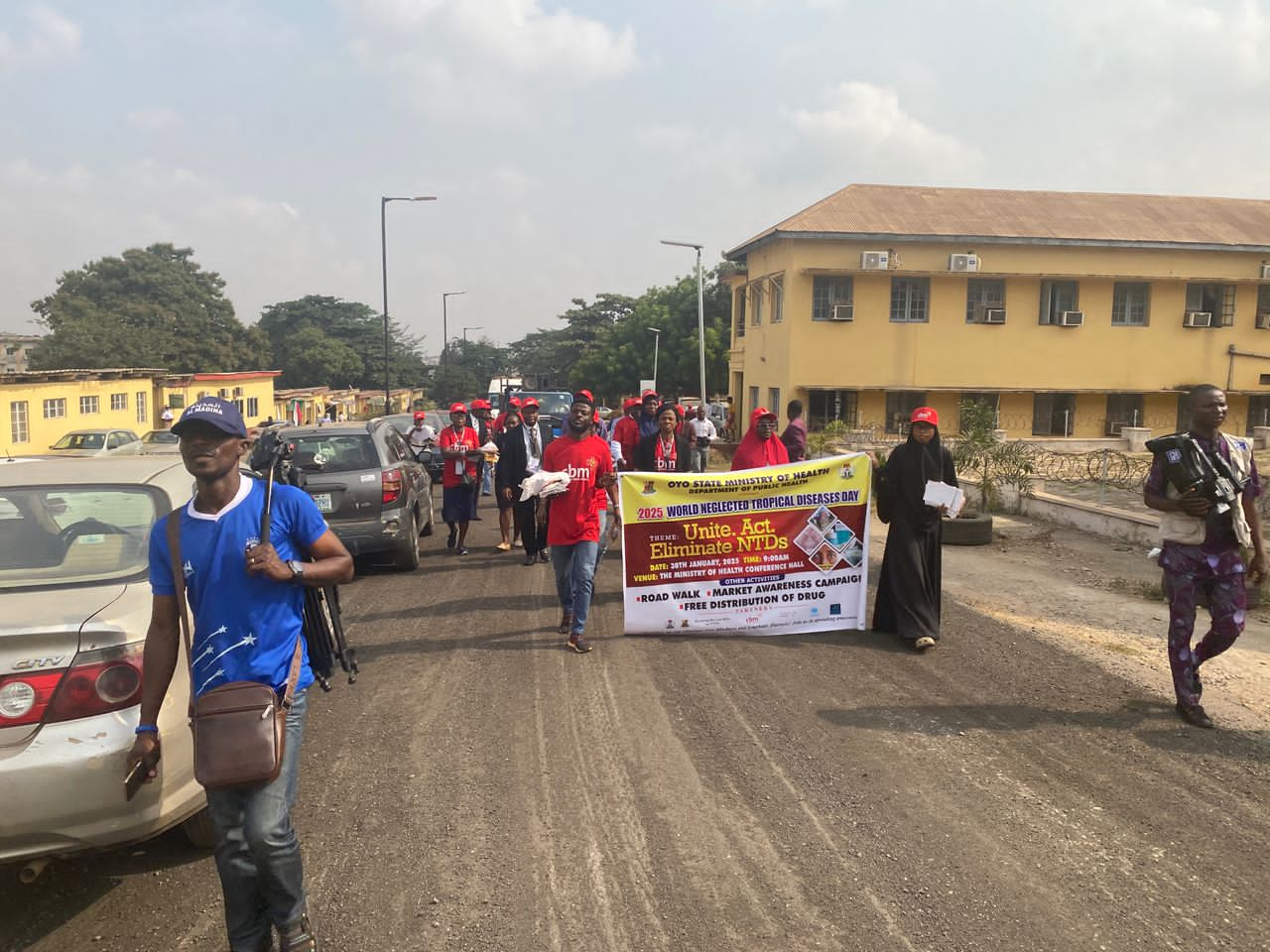
  The Oyo State Government has reaffirmed its commitment to eradicating Neglected Tropical Diseases (NTDs) with a substantial investment of ₦30 million in disease elimination efforts across the 33 Local Government Areas in the State. Speaking at a press briefing to mark the 2025 World NTDs Day, the Honourable Commissioner for Health, Dr. Oluwaserimi Ajetunmobi, highlighted the state’s achievements in combating these diseases over the past year. She noted that NTDs which include lymphatic filariasis (elephantiasis), onchocerciasis (river blindness), schistosomiasis, and soil-transmitted helminths, disproportionately impact the poorest and most marginalized communities, perpetuating cycles of poverty and limiting opportunities for growth and development. She said that among the most notable accomplishments of the State government is the successful implementation of the Mass Administration of Medicines (MAM) program, a major initiative aimed at eliminating NTDs. Through this program, the government trained 18,000 Community Drug Distributors (CDDs), who demonstrated exceptional dedication by reaching 13,401 communities across 298 wards in the state. According to her, these frontline health workers played crucial roles in delivering essential medications to prevent and treat lymphatic filariasis and onchocerciasis. Additionally, the state has strengthened its healthcare workforce by equipping 641 health workers at the Local Government Area (LGA) level with the necessary tools and knowledge to supervise and support community-based efforts, ensuring the program’s effectiveness. To further enhance coordination and implementation, 31 Directors of Environmental Health and Environmental Health Officers were trained to oversee NTD interventions within their respective LGAs. Dr. Ajetunmobi emphasized the state’s unwavering resolve to eliminate NTDs, recognizing their detrimental impact on public health, productivity, and overall well-being. “Here in Oyo State, we are acutely aware of the challenges posed by NTDs. These diseases affect the health and productivity of our people, but we remain resolute in our commitment to eliminating them through strategic investments, partnerships, and innovative approaches.” The Commissioner expressed profound appreciation to His Excellency, Governor Seyi Makinde, for his steadfast commitment to improving healthcare in the state. She acknowledged that the Governor’s approval of the funds for the MAM program last year demonstrates his administration’s dedication to making healthcare a priority. She also extended gratitude to major development partners, including the World Health Organization (WHO), UNICEF, CBM, Evidence Action, and other stakeholders whose support has been instrumental in advancing Oyo State’s fight against NTDs. Earlier in his remarks, the Permanent Secretary, Oyo State Ministry of Health, Dr. Akintunde Ayinde, underscored the importance of continuous awareness and community-led interventions in combating NTDs. The event was attended by key stakeholders, representatives from collaborating Ministries, and health sector partners, all of whom commended the government’s proactive measures toward ensuring a healthier, NTD-free Oyo State. The day’s activities featured the free distribution of essential medicines and an extensive sensitization campaign across major streets and markets in Ibadan.

Lagos Shuts 619 Facilities Over Environmental Violation

  THE Lagos State Environmental Protection Agency, LASEPA, has sealed at least 619 facilities, including Mosques, Churches, hotels, among others for various environmental infractions in 2024. General Manager of LASEPA, Dr Babatunde Ajayi, disclosed this during a media interactive session in Ikeja, Lagos. Ajayi revealed that noise pollution accounted for 528 of the closures as the agency intensified its enforcement of environmental laws. He said: “These operations are targeted households, hotels, and worship centres under the Environmental Management and Protection Law of 2017.” While he noted significant achievements by the agency in 2024, Ajayi said the agency would double its advocacy for environmental consciousness in 2025 while focusing on stricter enforcement of existing laws. He disclosed plans to intensify action against noise pollution, enforce anti-smoking regulations by designating smoking and non-smoking zones, and advocate proper waste management through authorised disposal bodies. He explained that public complaints would be handled more effectively through an expanded complaints centre and digital channels, while academic publications and public awareness campaigns would also be increased. Vanguard

Nigeria Ranks Sixth Globally In Suicide Rates – Don

  A Professor and Consultant Psychiatrist at Obafemi Awolowo University and the Obafemi Awolowo University Teaching Hospital, Ile-Ife, Prof. Adesanmi Akinsulore, has revealed that Nigeria ranks sixth globally among countries with the highest suicide rates. He disclosed that men account for 79% of suicides, while women are more prone to suicidal thoughts, emphasising the urgent need for collaborative efforts to address the issue, especially among students. Akinsulore made these remarks on Monday during a lecture at an event organised by The Still Waters Mental Health Foundation, held at Ladoke Akintola University of Technology Ogbomoso, Oyo State. The event, themed, “Navigating the Storm: Unraveling the Intricacies of Suicides Amongst Students,” focused on understanding and preventing suicide in educational institutions. He described suicide as a major public health concern, noting that it was the third leading cause of death globally among individuals aged 15 to 29 in 2021. According to him, while suicide is a personal tragedy, it has devastating social, emotional, and economic consequences. The psychiatrist attributed school-related risk factors for suicide to various challenges, including difficulties in accessing psychological care, stigma associated with seeking help, discrimination due to disabilities or physical differences, academic failure, and a lack of supportive school environments. He described suicide as a major public health concern, noting that it was the third leading cause of death globally among individuals aged 15 to 29 in 2021. According to him, while suicide is a personal tragedy, it has devastating social, emotional, and economic consequences. The psychiatrist attributed school-related risk factors for suicide to various challenges, including difficulties in accessing psychological care, stigma associated with seeking help, discrimination due to disabilities or physical differences, academic failure, and a lack of supportive school environments. He also highlighted broader risk factors such as depression, anxiety, substance abuse, previous suicide attempts, self-injury, loneliness, isolation, and chronic illnesses. Additionally, interpersonal difficulties, exposure to stigma, and access to lethal means were identified as contributors to suicidal behaviour. Akinsulore pointed out protective factors that could mitigate suicide risks, including strong parental support, social involvement, mentorship, and accessible student support services. “There is one suicide for every 25 attempts. In 2021, suicide was the third leading cause of death among 15 to 29-year-olds globally,” he said. He called for collective responsibility in tackling suicide, urging schools, communities, and stakeholders to prioritise mental health, combat stigma, and ensure access to resources for student well-being. “Navigating the storm is a collective responsibility. We must work together to create a supportive and inclusive environment that promotes student well-being and resilience,” he said. In his remarks, the Founder of The Still Waters Mental Health Foundation, Dr. Oyewole A. Olutunmise, reiterated the need for unity in addressing suicide and mental health challenges. “This gathering reminds us of the power of unity in addressing one of the most critical issues of our time—suicide and mental health challenges. The Still Waters Mental Health Foundation was borne from the belief that no one should face their struggles alone,” Dr. Olutunmise said. He expressed gratitude to the programme sponsors, organising committee, and other stakeholders for their support, stressing the importance of replacing silence with open conversations and fostering hope for the future. Punch

Combiart Dispersible Tablet: NAFDAC Warns Nigerians Of Fake Anti-Malaria Drugs In Circulation

  NAFDAC, National Agency for Food and Drugs Administration and Control has raised an alert over the circulation of counterfeit Combiart Dispersible Tablet 20/120mg in Nigeria. NAFDAC disclosed this via a post on its X handle. According to the agency, the product is manufactured by Strides Arcolab Limited, based in India. “This product was discovered in the FCT and Rivers State during surveillance activities conducted by officers of the Post Marketing Surveillance Directorate of NAFDAC. “The laboratory report of the analysis carried out on the product revealed that it contained zero active pharmaceutical ingredients. The product was also observed to have two different date markings. The NAFDAC database of registered products confirmed that the product licence has expired, and the NAFDAC registration number on it is incorrect and does not belong to the product. “The Artemether and Lumefantrine combination belongs to a group of medicines known as antimalarials. It treats malaria, a red blood cell infection transmitted by mosquito bites. However, this medicine is not used to treat severe or complicated malaria,” NAFDAC stated. The agency warned that counterfeit medicines pose significant risks to health as they do not meet regulatory standards, meaning their safety, quality, and efficacy cannot be assured. It added that counterfeit medicines often fail to effectively treat conditions, leading to severe health consequences, including death. NAFDAC identified the product’s batch number as 7225119, with a NAFDAC registration number of A11-0299. It noted that the manufacturing dates on the product were June 2023 and February 2023, while the expiry dates were May 2026 and June 2026. The manufacturer’s name and address were listed as: Strides Arcolab Limited, 36/7, Suragajakkanahalli, Indlavadi Cross, Anekal Taluk, Bangalore (562 106), India. The agency directed all its zonal directors and state coordinators to conduct surveillance and remove counterfeit products from circulation. Importers, distributors, retailers, healthcare professionals, and caregivers were urged to exercise caution and vigilance within the supply chain to avoid the importation, distribution, sale, and use of counterfeit products. “All medical products must be obtained from authorized/licensed suppliers. The authenticity and physical condition of the products should be carefully checked,” NAFDAC advised. Healthcare professionals and consumers were also urged to report any suspicion of substandard or falsified medicines or medical devices to the nearest NAFDAC office. Reports can also be made via the NAFDAC hotline at 0800-162-3322 or by email at sf.alert@nafdac.gov.ng. Similarly, adverse events or side effects related to the use of medicines or devices should be reported through the NAFDAC e-reporting platform on its website, the Med-Safety app (available on Android and iOS), or via email at pharmacovigilance@nafdac.gov.ng. NAFDAC noted that the alert will also be uploaded to the World Health Organisation Global Surveillance and Monitoring System.

Health Workers Arrested In Ebonyi For Alleged Theft

At least six employees of the Ministry of Health in Ebonyi State have been arrested for allegedly stealing government property. The suspects were reportedly apprehended on Saturday night at the ministry’s premises while attempting to move the items to points of sale. Governor Francis Nwifuru disclosed the arrests in a statement issued on Sunday by his Chief Press Secretary, Monday Uzor. The statement read, “Ebonyi State Governor, Chief Francis Ogbonna Nwifuru, has ordered the arrest and prosecution of one Mr Ndukwe Ayansi and five others for allegedly diverting materials meant for the State’s Ministry of Health.” The governor, who was on his way to inspect a project, spotted a Toyota Dyna truck being loaded with registers, books, and other materials from the ministry’s warehouse. Upon further investigation, he discovered that patients’ data registers, cards, and other documents were being moved into the vehicle. The statement added, “It was also discovered that all the documents had been sold without government approval.” Speaking at the scene, Governor Nwifuru condemned the act, describing it as sabotage against the government’s efforts to reform the health sector. He said, “You are selling government documents without approval on a Saturday afternoon. Our hospitals in rural areas are in need of registers, data entry forms, and hospital cards. Sadly, the ones provided by the government are being sold by you. This is pure sabotage to our efforts in the health sector, and it will not be tolerated.” The suspects have been handed over to the police for further investigation and prosecution.