
Featured
Seven Days Of Oro Rites Govern Alaafin’s Actions, Not Ego – Yoruba Chief Dismisses Claims Of Snubbing Olubadan

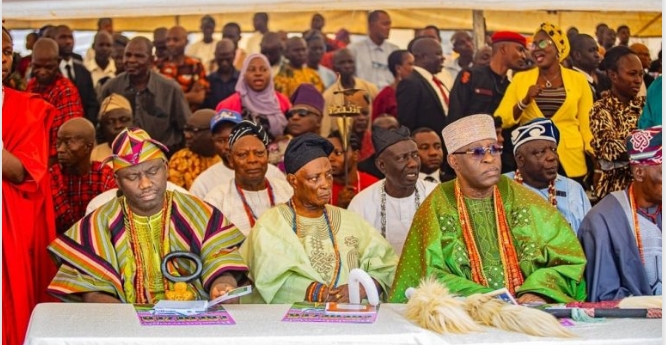
IBADAN – THE Atóbaáse of Yorubaland, Chief Babajide Agunbiade, has dismissed claims that the Alaafin of Oyo, Oba Akeem Owoade I, disrespected the Olubadan of Ibadanland or any other Yoruba monarch during a recent inter-faith gathering in Oyo State, explaining that the monarch’s conduct was dictated by centuries-old sacred oro rites.
In an open letter on Tuesday addressing the controversy, Agunbiade said public speculation suggesting a “snub” was a misreading of the ancient traditions governing the Alaafin’s stool.
“The Alaafin is bound by sacred oaths and ritual observances that predate modern Nigeria,” he said.
The Yoruba chief explained that the Alaafin is currently observing the seven-day oro rites, a traditional practice that imposes strict limitations on physical conduct and public interactions. During this period, certain gestures of greeting, including standing to receive visitors, are prohibited, irrespective of the visitor’s rank or prominence.
“At no time has the Alaafin shown disrespect to the Olubadan or any other traditional ruler,” Agunbiade wrote.
“Any assumption of discourtesy ignores the sacred obligations that every occupant of the Oyo throne must uphold.”
He emphasized that these rites are neither optional nor negotiable.
“To expect otherwise would be to demand that the Alaafin compromise the sanctity of an institution that has existed for over a thousand years,” Agunbiade added.
The Atóbaáse called on the Yoruba public to reflect on the importance of tradition, hierarchy, and ancestral institutions. He warned that interpreting the monarch’s conduct through the lens of social media commentary or temporary public opinion risks undermining centuries of Yoruba civilization.
“The Alaafin is not merely an individual,” he said.
“He is the living embodiment of an ancient institution charged with preserving Yoruba culture, diplomacy, and governance. Fidelity to tradition is paramount.”
Agunbiade also recalled the historical significance of the Oyo Empire, which between the 14th and 19th centuries unified vast Yoruba territories, institutionalized governance, and projected cultural and military influence across what is now Nigeria and the Republic of Benin.
“To respect the Alaafin is to respect this history, not as an act of superiority over other thrones, but as acknowledgment of distinct roles within our shared Yoruba heritage,” the letter noted.
The Yoruba leader stressed that the Alaafin seeks peace, harmony, and mutual respect among all traditional rulers and harbors no personal ill will toward any king.
“Tradition must not be misunderstood. Fidelity must not be mistaken for arrogance. Silence must not be misread as hostility,” he added.
In conclusion, the Atóbaáse expressed confidence in the Alaafin’s ability to safeguard the integrity of the Oyo throne and Yoruba traditions while urging the public to support and protect the preservation of ancient practices like the oro rites.